Wind Flags and Teardrop Flags: Roadside Visibility That Works风旗与水滴旗:让路边店面被看见
Every weekend we get a call from a shop, showroom or open-house organiser whose teardrop flag toppled over in the wind, or whose flags are so crowded with text that drivers can't read them before they've passed. A good teardrop flag printing setup in Malaysia is not complicated, but it depends on three choices most people skip: shape, pole height and base. Get those right and a flag works from fifty metres away in a petrol-station breeze. Get them wrong and you're reprinting in two weeks.
Teardrop vs feather: pick by wind, not looks
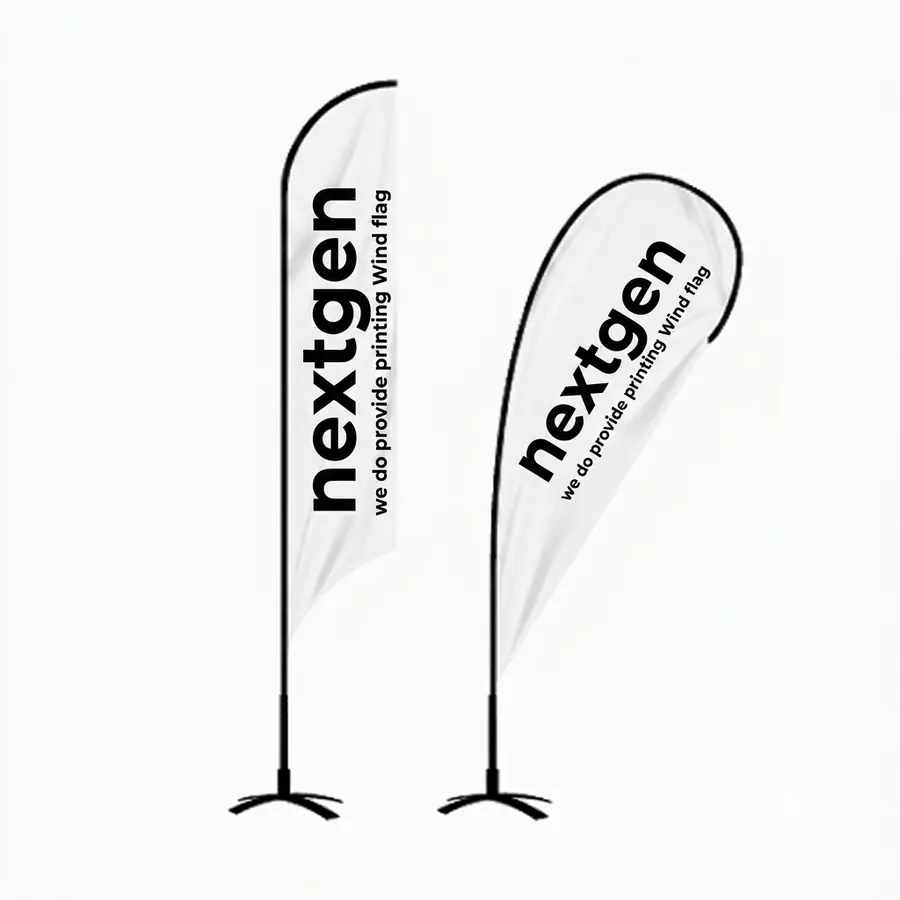
Teardrop flags have a wide, rounded top that tapers to a point — they catch wind like a sail, which makes them visible even in light breeze but also means they lean and twist more in gusty, open areas. Feather flags are tall and slender with a curved top edge; they slice through wind more cleanly and stay straighter on exposed roadsides or elevated spots. Our rule of thumb: teardrop for car parks, entrances and showroom frontages where the wind is moderate and you want bulk and colour; feather for open roadside, rooftops or anywhere wind is constant and you want height without the flag thrashing around.
Pole height and why taller isn't always better
Flags come in roughly three bands: 2–2.5m for tight entrances and indoor-adjacent spots, 3–3.5m for standard roadside or car-park use, and 4–5m for wide frontages, petrol stations and anywhere you're competing with other signage across a road. Go taller only if you have the base weight to match — a 5m flag on a light cross base in open wind will drag itself (and whatever it's anchored to) across the car park. We've reprinted more flags because the pole was too tall for the base than for any artwork mistake.
Choosing the right base for your surface
This is the part people get wrong most often, because the base rarely gets mentioned until after the flag arrives and doesn't fit the ground.
- Ground spike — for grass, soil or sand. Pushes straight into soft ground; useless on tarmac or tiles, and it's the base that pulls out first in a storm if the ground is loose.
- Cross base — flat, weighted, sits on tarmac, tiles or concrete. Needs sandbags or extra plates in open wind; the lightest cross base is the one most often blown over, not the flag itself.
- Water base — a fillable tank base, heavier than cross once filled, good for car parks and event grounds where you can't drive a spike in and don't want to carry sandbags. Takes a few minutes to fill and empty, which matters if you're setting up and tearing down the same day.
If you're not sure what your ground is on the day — say, an outdoor event that moves between a tiled plaza and a grass verge — order a cross base with a water-fill option, or keep a spike base as backup. Tell us the surface when you enquire and we'll match the base before you pay for one that doesn't work.
Keep the message to a name and one word
A flag is read at a glance by someone walking or driving past, not studied like a banner. The ones that work have a logo or brand name and one short word — "OPEN", "SALE", "NEW" — nothing else. Long taglines, phone numbers and QR codes disappear at ten metres; save those for a roll-up stand or a flyer handed out at the base of the flag. One more thing people forget: a single-sided flag reads backwards from behind. If your flag will be seen from both directions on a two-way road, pay the small difference for double-sided printing — a mirrored logo looks careless, not intentional.
When flags aren't the right tool
Flags are great at marking a single fixed point — an entrance, a gate, a stall — from a distance. They're the wrong choice for a message with more than three or four words, for anywhere you need the display indoors or near pedestrians (the pole sways and the base is a trip hazard in tight spaces), or for a one-day indoor event where an A-stand does the same signalling job without needing wind at all. We covered the fuller decision between bunting, roll-up stands and other display formats in our portable display stands guide — read that if flags turn out not to fit your spot.
A simple way to plan a flag order
Walk the actual site before you order, not after. Note the ground surface at the exact spot the flag will stand, check whether it's genuinely exposed to wind or sheltered by a building, and decide if the flag needs to read from one direction or two. Order one size band below what looks "about right" from a photo — flags look smaller in person than in a mockup, but the base weight requirement jumps fast once you go up a band. If in doubt, ask us for the base that matches your ground before confirming quantity; it's a five-minute WhatsApp question that saves a reprint.
每个周末我们都会接到店家、展厅或开放参观主办方的电话——水滴旗被风吹倒,或者旗面文字太多,车辆经过时根本看不清。马来西亚的水滴旗印刷其实不难,难的是大多数人会跳过的三个决定:形状、旗杆高度与底座。选对这三样,旗帜在油站级的风里,五十米外也能看清;选错了,两周后就要重印。
水滴旗还是羽毛旗:看风,不是看好看
水滴旗顶部宽圆、往下收尖,形状像帆,轻风中就很显眼,但在开阔多风处也更容易歪斜扭动。羽毛旗细长、顶边带弧线,破风更干净,在空旷路边或高处依然挺直。我们的经验法则:停车场、入口与展厅门面风力适中,想要色块与份量,选水滴旗;开阔路边、屋顶或长年有风的地方,想要高度又不想旗面乱甩,选羽毛旗。
旗杆高度:越高不等于越好
常见高度大致分三档:2–2.5 米适合狭窄入口或近室内的位置,3–3.5 米是标准路边或停车场尺寸,4–5 米适合宽阔门面、油站,或要跟对面招牌抢视线的场地。只有底座重量配得上才值得选更高——5 米旗配轻十字底座,在开阔风口里,旗帜会把底座(连带固定物)一起拖着走。我们重印的旗帜,多数不是因为稿件出错,而是旗杆高度配不上底座。
按地面选对底座
这是最常被忽略的一环,往往等旗帜到货、发现装不上地面才想起来问。
- 地钉底座——适合草地、泥地或沙地。直接插入软土;水泥地或瓷砖上完全用不上,而且地面松软时,暴风雨中最先被拔出来的通常是地钉,不是旗帜。
- 十字底座——扁平带重量,可放在水泥地、瓷砖或柏油路上。开阔风口需要加沙包或配重片;最轻的十字底座,往往是最先被吹倒的那个,而不是旗面本身。
- 注水底座——可注水的水箱式底座,注满水后比十字底座更重,适合停车场、活动场地等无法打地钉、又不想扛沙包的场合。注水与排水需要几分钟,如果当天要搭建又要拆场,这点要算进时间表。
如果当天地面情况不确定——比如活动场地在瓷砖广场与草地之间切换——可以选带注水功能的十字底座,或多备一个地钉底座当后备。询价时告诉我们现场地面材质,我们会先替你配对底座,而不是让你先付钱才发现用不上。
文字只留品牌名加一个词
旗帜是路人或车辆经过时一眼看到的,不是拿在手上细读的横幅。真正有效的旗帜,只有 LOGO 或品牌名加一个短词——「OPEN」「SALE」「NEW」——别的都不要。长标语、电话号码与二维码,十米外就看不清了,这些内容留给易拉宝或旗杆下发的传单。还有一点常被忽略:单面印刷的旗帜,从背面看文字是反的。如果旗帜会在双向车道被两面看到,多付一点选双面印刷——镶字反过来显得随意,不是刻意设计。
什么时候不该用旗帜
旗帜最擅长从远处标示一个固定点——入口、闸门、摊位。但如果信息超过三四个字、需要放在室内或靠近行人的地方(旗杆会摇晃,底座在狭窄空间是绊脚隐患),或是只需一天的室内活动,A 字展示架能达到同样的提示效果,又不用靠风。我们在便携展示架指南中更完整地比较过直幅、易拉宝与其他展示形式——如果旗帜不适合你的场地,可以参考那篇。
订旗帜前的简单检查清单
先到现场走一遍,别等订了才看。记下旗帜要立的确切位置的地面材质,确认那里是真正迎风还是有建筑遮挡,并决定旗帜只需单面读还是双向都要看清。尺寸建议比照片看起来「刚好」的那档小一号——实物看起来比效果图小,但底座重量要求一旦升一档就会明显跳升。如果不确定,先用五分钟在 WhatsApp 问清楚配套底座,再确认数量,比重印省事。