Waterproof and Outdoor Stickers: Which Materials Actually Survive?防水与户外贴纸:哪些材质真的扛得住?
We get this question every week — F&B owners doing cold-room labels, shopfronts putting stickers on glass doors that face west all afternoon: "will this actually survive?" The honest answer depends on three things — water, UV and what the label sticks to — and picking the wrong waterproof sticker printing material is the single most common reason a sticker job gets reprinted within a year.
What "waterproof" actually means for a sticker
A sticker has three separate failure points, and paper fails at all three: the paper substrate absorbs water and disintegrates; the ink, if not solvent or UV-cured, smears or fades; and the adhesive loses grip once the surface underneath gets damp. Waterproof printing solves all three at once — a synthetic film substrate that doesn't absorb water, ink that's chemically stable once cured, and an adhesive rated for the surface and the moisture it will meet. Skip any one of the three and the sticker still fails, even if the order form says "waterproof".
The synthetic film that actually holds up outdoors: PVC
For anything mounted outside — shopfront decals, signage panels, vehicle stickers left in full Malaysian sun — outdoor PVC sticker with UV lamination is what we specify by default. The lamination layer does the real work: it blocks UV before it reaches the ink, so colour doesn't chalk out in 12 months the way an unlaminated print will. Expect roughly 2–3 years of outdoor life on a laminated PVC sticker in direct sun, versus under a year unlaminated. It also survives rain and the occasional pressure wash, which matters for anything at ground level.
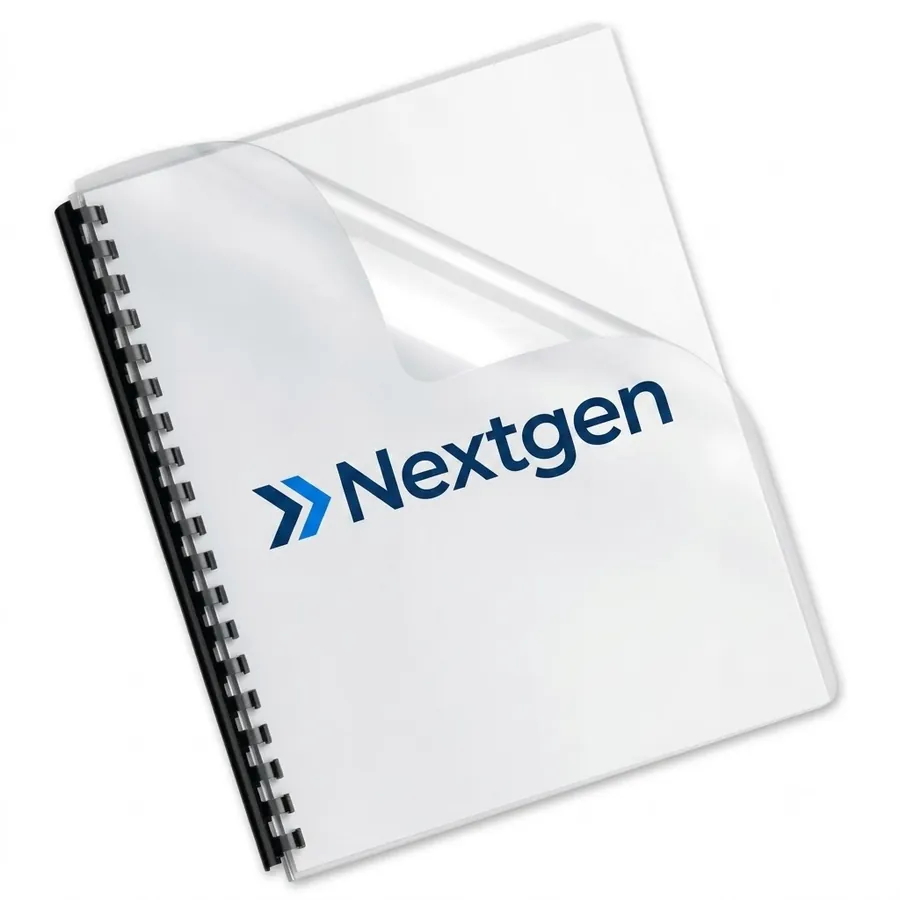
White PP: the fridge-and-freezer workhorse
For product labels rather than outdoor signage — bottles, jars, chilled and frozen packaging — white PP sticker is the material we sell the most of, and for good reason. It's waterproof and oil-resistant, holds up under condensation, and its adhesive is formulated for the cold chain: labels applied at room temperature stay stuck after a night at −18°C in a freezer, which paper labels simply cannot do — they lift within hours. If your product ever touches a fridge, a cooler box, or gets handled with wet hands at a wet market, PP is the safer default over paper.
Transparent film for the "no-label" look
When the brief is a premium, label-free appearance on glass or clear packaging, transparent sticker film gives that look while staying fully waterproof. It's the same synthetic base as white PP without the white backing, so ink prints only where you want it to show and the container shows through everywhere else. It's a popular choice for craft beverage bottles and cosmetic jars, where the packaging itself is part of the branding.
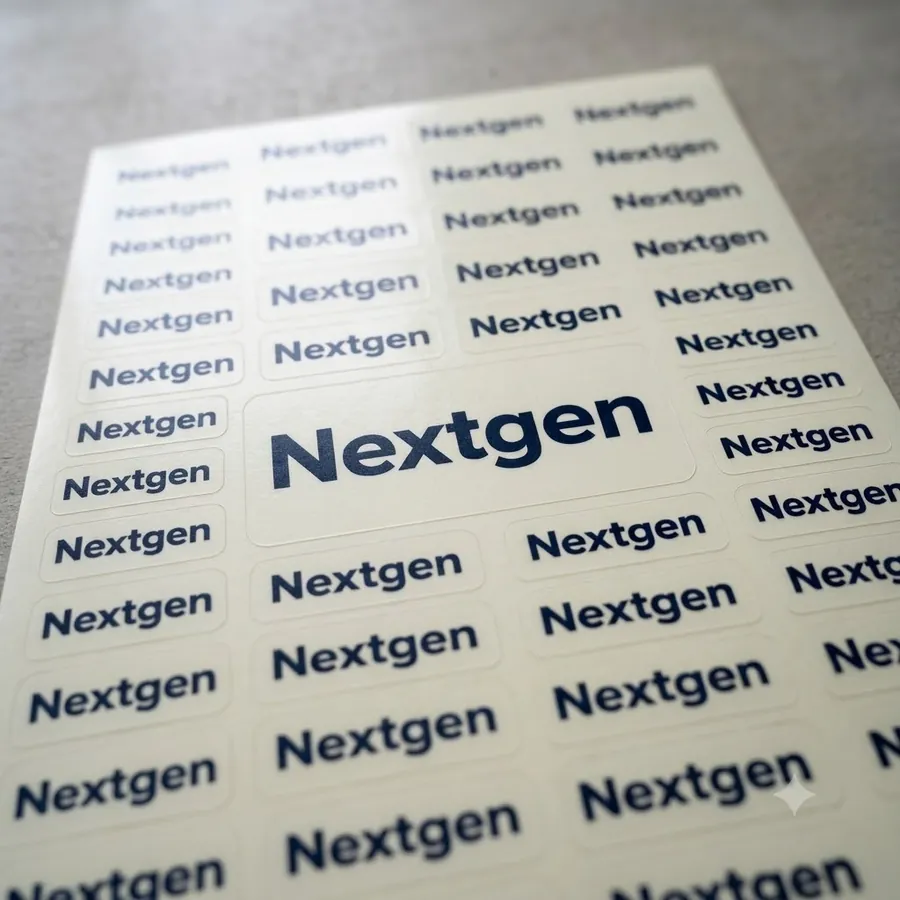
Car and window stickers: a special adhesive problem
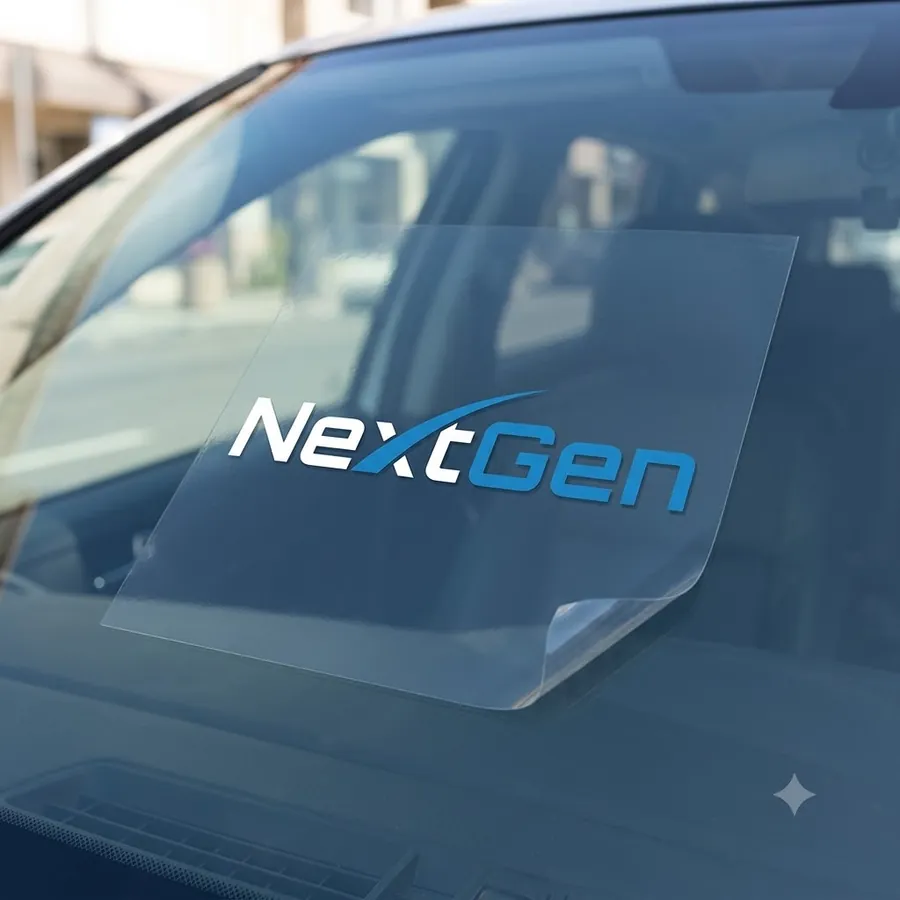
Vehicle glass and shopfront windows add a fourth failure point on top of water and UV: heat cycling. A car windscreen in a KL car park can swing from 25°C in the morning to well over 60°C by afternoon, and a cheap adhesive softens, bubbles or slides at that temperature. Car window sticker film is formulated to hold through that cycle, and comes in one-way vision options — perforated film that shows an image from outside while staying see-through from inside — which is what most delivery riders and company cars actually run for branding without blocking the driver's view.
What actually fails in the field
- Direct sun without lamination — the most common reprint reason; colour fades or chalks within months.
- Paper labels on chilled or frozen products — the adhesive releases in the fridge before the "sell by" date arrives.
- Wrong adhesive on curved or textured surfaces — a flat-panel adhesive won't hold on a ridged bottle or a car door seam; tell us the actual surface, not just "outdoor".
- Skipping lamination to save cost on a long-life job — false economy once you count the reprint.
How to choose without guessing
Two questions settle almost every material decision: where does it go, and how long does it need to survive? Indoor, dry, short shelf life — paper is fine and cheaper, as we cover in our sticker material guide. Anything that meets water, sun, cold or repeated handling — move to PP, transparent or laminated PVC depending on the surface and look you want. When in doubt, over-spec the adhesive rather than the film — a sticker that falls off costs more in reprints and reputation than the few sen saved on a cheaper backing.
Where to start
Tell us what the sticker sits on — glass, chilled packaging, a car door, an outdoor signboard — and how long it needs to last, and we'll recommend the material and quote it the same day. Talk to us before you commit to a print run that might not survive its first rainy season.
我们每周都会被问到这个问题——做冷藏标签的餐饮业者、把贴纸贴在西晒玻璃门上的店家:「这个真的撑得住吗?」诚实的答案取决于三件事:水、紫外线,以及贴纸黏在什么表面上。选错防水贴纸材质,是贴纸订单一年内要重印最常见的原因。
「防水」对贴纸来说到底是什么意思
贴纸有三个各自独立的失效点,而纸质在这三点上全部失守:纸质底材吸水后会解体;油墨若非溶剂型或 UV 固化,会晕开或褪色;底材一旦受潮,胶水也会失去黏性。真正的防水印刷要同时解决这三点——不吸水的合成薄膜底材、固化后化学性质稳定的油墨,以及针对表面与湿度选对等级的胶水。三者少一个,贴纸照样失效,就算下单单上写着「防水」也一样。
真正扛得住户外的合成薄膜:PVC
凡是要装在户外的——店面贴纸、招牌面板、长时间曝晒在马来西亚烈日下的车贴——我们默认指定户外 PVC 贴纸并加覆 UV 膜。真正起作用的是覆膜层:它在紫外线到达油墨之前先挡下来,所以颜色不会像未覆膜的印刷品那样,12 个月内就粉化褪色。覆膜 PVC 贴纸在直晒环境下大约能撑 2–3 年,未覆膜的通常不到一年。它也扛得住雨水与偶尔的高压冲洗,这对贴在地面高度的物件尤其重要。
白色 PP:冷藏冷冻的主力
如果是产品标签而非户外招牌——瓶身、罐身、冷藏冷冻包装——我们卖得最多的是白色 PP 贴纸,原因很实在。它防水又抗油,撑得住冷凝水,胶水配方专为冷链设计:常温贴上的标签,在 −18°C 冷冻库放一夜后依然黏着,这是纸质标签做不到的——纸标签几小时内就会翘边脱落。只要产品会进冰箱、冰桶,或在湿漉漉的巴刹被湿手拿取,PP 都比纸质更保险。
透明贴:「无标签感」的效果
如果需求是玻璃瓶或透明包装上那种高级、「看不出贴了标签」的效果,透明贴纸薄膜能做到这点,同时依然完全防水。它跟白色 PP 是同一种合成底材,只是没有白色底层,只在需要显示油墨的地方印刷,其余部分让容器本身透出来。手工饮品瓶身、化妆品罐——包装本身就是品牌一部分的产品,很常用这个材质。
车贴与车窗贴:胶水的特殊难题
车窗玻璃与店面窗户,在水与紫外线之外还多了第三个难题:温度循环。吉隆坡停车场里的车挡风玻璃,可以从早上 25°C 飙到下午超过 60°C,廉价胶水在这种温度下会软化、起泡或滑动。车窗贴薄膜就是为了扛住这种温度循环而设计的,还提供单向透视款——一种打孔薄膜,从外面看得到图案,车内往外看却依然透视——这也是多数外送骑士与公司用车做品牌曝光时的实际做法,既能打品牌又不挡驾驶视线。
实际会失效的状况
- 未覆膜就直接曝晒——最常见的重印原因;颜色几个月内就褪色或粉化。
- 纸质标签用在冷藏冷冻产品上——保质期还没到,胶水就已经在冰箱里松脱。
- 曲面或粗糙表面用错胶水——平面用的胶水贴不住有棱纹的瓶身或车门接缝;请告诉我们实际贴的表面,而不只是「户外用」。
- 为省成本跳过长效贴纸的覆膜——算上重印的成本,其实并不划算。
怎么选,不用靠猜
两个问题几乎能解决所有材质决定:贴在哪里?需要撑多久?室内、乾燥、短保存期——纸质就够用又便宜,详见我们的贴纸材质指南。只要会碰到水、日晒、低温或反复触碰——就该转向 PP、透明贴或覆膜 PVC,依表面与外观需求而定。拿不准的时候,宁可把胶水规格订高一点,也不要在底材上省——贴纸脱落造成的重印与商誉损失,远超过省下的那点材料费。
从哪里开始
告诉我们贴纸要贴在什么表面——玻璃、冷藏包装、车门、户外招牌——以及要撑多久,我们会推荐材质并当天报价。联系我们,别等雨季来了才发现印错材质。