Restaurant Menu Printing: Hard Cover, Laminated or Tent Card?餐厅菜单印刷:精装、护膜还是桌牌?
Every week we handle menu printing for restaurants, cafes and hawker stalls across Malaysia, and the question we're asked most isn't about price — it's which format actually survives service. A menu is one of the few pieces of print a customer holds in their hands for the whole meal, so the wrong material shows grease and thumb marks within a month and gets replaced far sooner than it should have to be. Here's how the three formats we print most often — hard cover, hard laminated and tent card — actually hold up, plus where a food flag earns its place on the table.
What a menu actually has to survive
Before materials, the real question is: how many hands touch this per day, and how often do your prices change? A 20-seat cafe doing two sittings a lunch service puts a menu through far less handling than a 100-seat mall restaurant running through dinner rush. Meanwhile a stall that changes its specials weekly needs an update path that doesn't mean reprinting the whole book every time. Get these two answers right first, and the material choice mostly answers itself.
Hard cover menus: the fine-dining presentation
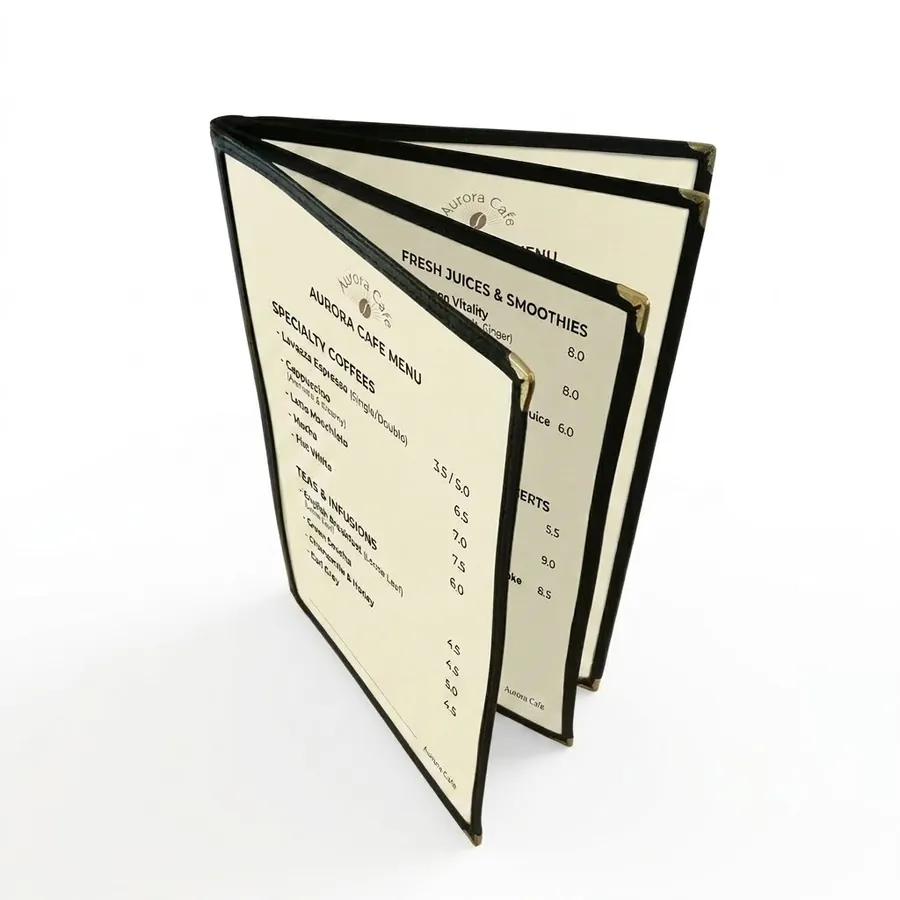
A hard cover menu uses rigid board covers — often wrapped in leatherette, linen or a printed laminate — around inner pages that sit in a ring or screw-post binding so you can swap a single page without touching the rest of the book. This is the format for restaurants where the menu itself is part of the experience: fine dining, hotel outlets, wine lists, degustation menus. The weight and the way it opens flat on the table signal price point before a single dish is read. The trade-off is cost per unit and a slower reprint cycle — a torn or badly stained cover needs replacing as a unit, so this format suits venues where menus are handled carefully by service staff rather than passed around a busy counter.
Hard laminated menus: the everyday workhorse
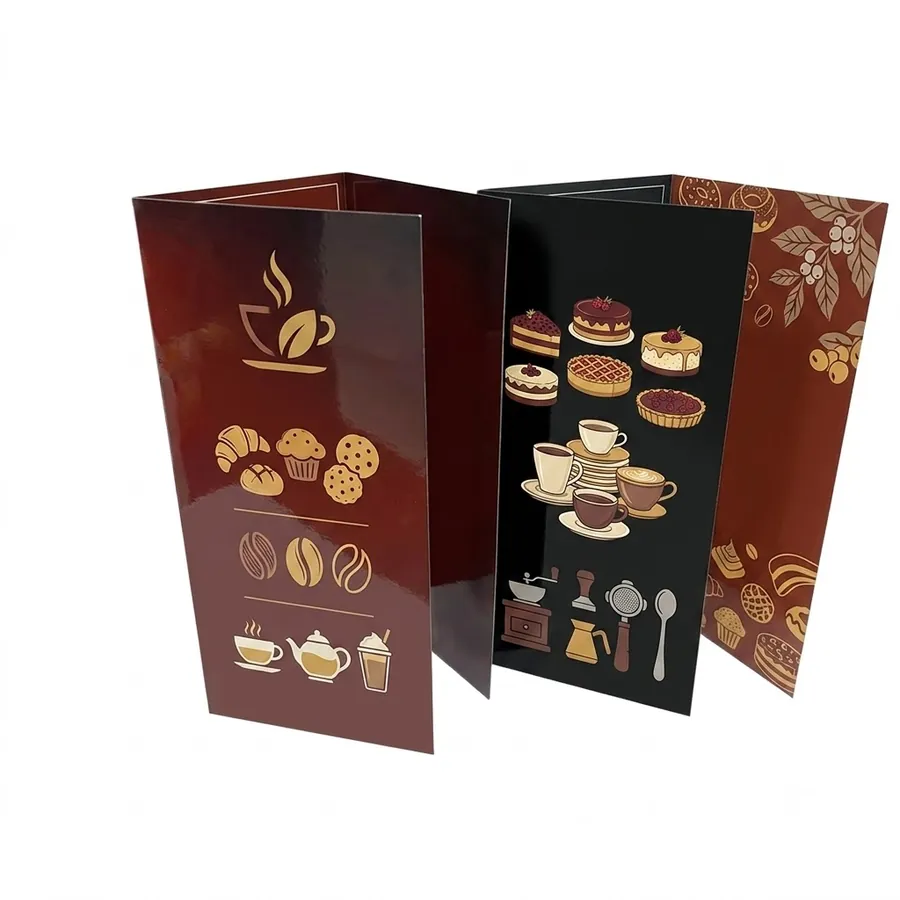
A hard laminated menu is thick board — usually 300–400gsm — with a heavy gloss or matte laminate film fused over both sides. It wipes clean after a spilled drink, resists dog-earing from being stacked and handed across a counter all day, and survives hundreds of services before it looks tired. This is what we print most for casual dining, cafes, kopitiams and food courts, because the cost per piece is low enough that reprinting a full run when prices change is still cheap, and the finish still looks sharp under harsh restaurant lighting if you go matte rather than gloss — gloss glares under downlights and photographs badly for customers taking a menu photo before ordering.
Tent cards: the upsell that sits on the table
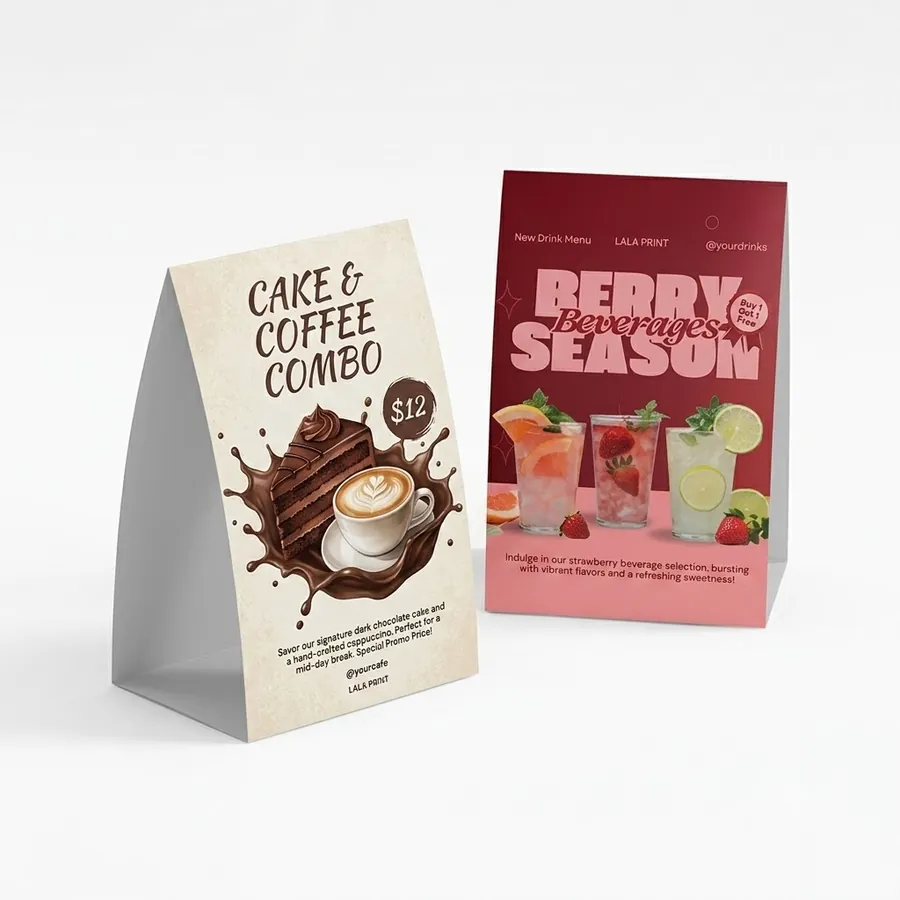
A tent card is a folded, free-standing card — usually A5 or smaller — printed both sides so it reads from every seat at the table. It isn't a replacement for the main menu; it's where you put the thing you actually want to sell this month: a set lunch, a seasonal drink, a QR code to your delivery app or loyalty programme. Because it's cheap per piece, you can afford to reprint it every time a promotion changes without touching your main menu at all, which is exactly the update path a weekly-specials stall needs. We tell clients to treat the tent card as their most flexible marketing surface in the whole restaurant — cheaper to change than a banner, more visible than a poster on the wall.
Food flags: the smallest print item that still needs planning
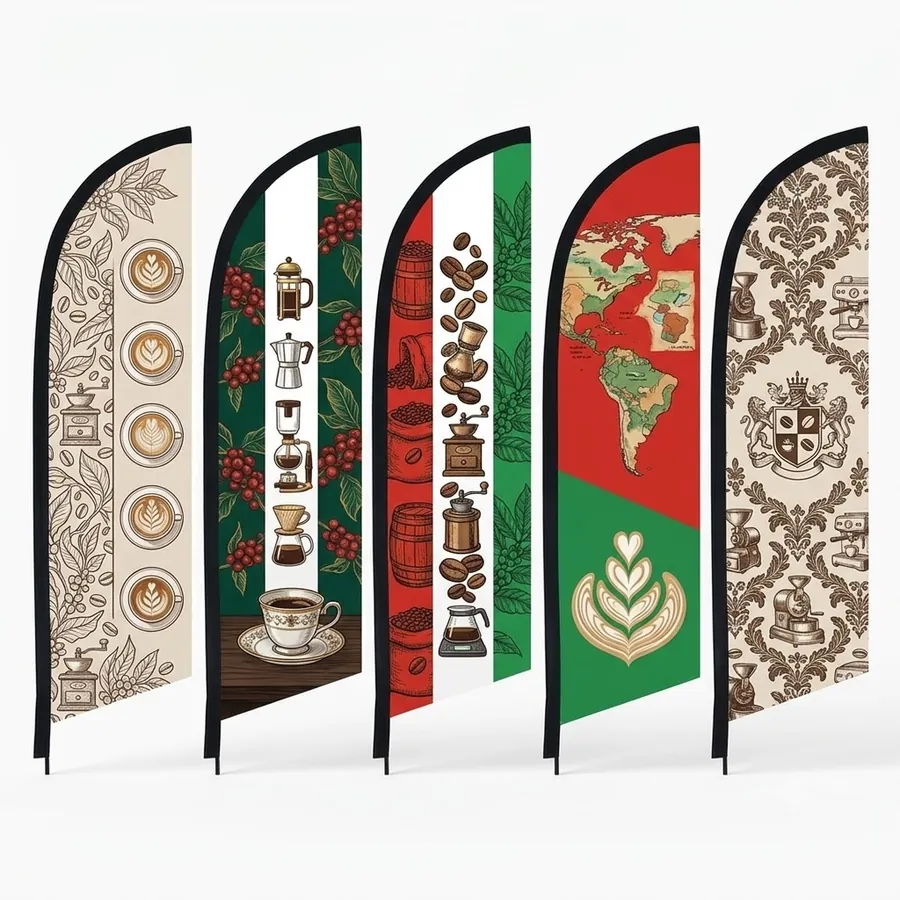
A food flag — a mini flag on a pick, stuck into a burger, dessert or bento box — isn't a menu at all, but it belongs in the same conversation because it does the same job at a smaller scale: naming a dish or flagging a promo at the exact moment a customer is deciding whether to photograph it. They're cheap enough to order in the thousands, and for food-facing items like this we print on food-grade stock so there's no compliance question about what's touching the food.
Matching menu printing to your restaurant
- Fine dining, hotel F&B, wine lists — hard cover, ring-bound inserts so pricing updates don't touch the cover.
- Casual dining, cafes, kopitiams, food courts — hard laminated, matte finish, reprint the full set when prices move.
- Hawker stalls, weekly specials, delivery-heavy outlets — tent card as the primary "menu," updated as often as the offer changes.
- Any outlet running promotions or QR ordering — add a tent card even if you already have a bound menu; it's the cheapest way to push something new without a full reprint.
- Cafes, dessert bars, bento/box meals — food flags for branding and dish naming at the point of photography.
Getting reprints and price changes right
The most common mistake we see is treating the menu as a one-off job instead of a living document. Keep your layout file and product photography with us so a price change is a same-file reprint, not a redesign from scratch — most reprints on unchanged artwork turn around in 2–4 working days. If you're updating dish names or adding photos, send us clean, print-ready files rather than screenshots or low-resolution phone photos; our guide to preparing print-ready artwork covers exactly what we need and why it saves a revision round. And budget for a full F&B printing refresh — menu, tent cards and flags together — whenever you overhaul the food photography, since mismatched styles between pieces are more visible to customers than most owners expect.
Where to start
Tell us your seat count, how often your menu changes and whether you want a full redesign or just a reprint, and we'll recommend the format and quantity that actually fits — talk to us before you commit to a print run.
我们每周都在为马来西亚各地的餐厅、咖啡馆与小贩摊位处理菜单印刷,客户问得最多的不是价格,而是哪种材质真的经得起日常使用。菜单是顾客整餐都会拿在手上的少数印刷品之一,选错材质,一个月内就会出现油污和手指印,换新的速度比原本该有的快得多。以下是我们印得最多的三种格式——精装本、护膜硬卡与桌牌——实际耐用度如何,以及食物旗为什么也值得放进同一张清单里。
菜单到底要经得起什么考验
在谈材质之前,真正要问的是:每天有多少双手会碰到这份菜单,以及你的价格多久变动一次?一间 20 座的咖啡馆做两轮午市,菜单被翻动的频率远低于一间百人座位、晚市高峰不断的商场餐厅。而每周更新特餐的摊位,需要一种不用整本重印的更新方式。先把这两个问题想清楚,材质该怎么选基本上就有了答案。
精装菜单:高级餐饮的门面
精装菜单采用硬质封面板——常包裹皮革纹、亚麻布或印刷护膜——内页以环装或螺丝装订固定,方便单独更换某一页而不动到整本。这是适合把菜单本身当作体验一部分的餐厅:精致餐饮、酒店餐饮、酒单、品鉴菜单。它的重量与摊平在桌上的方式,在客人读到第一道菜之前就先传达了价位定位。代价是单价较高、重印周期较慢——封面破损或严重污损就要整本更换,所以这种格式更适合服务人员会小心翻阅、而不是在忙碌柜台随手传递的场合。
护膜硬卡菜单:日常主力款
护膜硬卡菜单使用厚卡纸——通常 300–400gsm——双面覆一层厚亮膜或哑膜。打翻饮料一擦就干净,整天在柜台被叠放、递来递去也不容易卷角,用上几百次服务也不会显旧。这是我们印得最多的款式,适合休闲餐饮、咖啡馆、茶餐室与美食广场,因为单价够低,价格调整时整批重印成本也可以接受;而且选哑膜而非亮膜,在餐厅刺眼的灯光下依然清晰——亮膜在射灯下会反光,顾客点餐前拍照留念时也不好看。
桌牌:坐在桌上的加单利器
桌牌是一张对折、可站立的卡片——通常 A5 或更小——双面印刷,从餐桌任何一个座位都能看到。它不是用来取代主菜单的,而是用来放你这个月真正想卖的东西:套餐、季节饮品、外送 App 的二维码或会员计划。因为单价便宜,促销一变就能重印,完全不用动主菜单,这正是每周换特餐的摊位需要的更新方式。我们常跟客户说,桌牌是整间餐厅里最灵活的营销载体——比横幅便宜换、比墙上海报更容易被看到。
食物旗:最小的印刷品也需要规划
食物旗——插在汉堡、甜品或便当盒上的小旗签——严格来说不算菜单,但它做的是同一件事,只是规模更小:在顾客决定要不要拍照的那一刻,标出菜名或促销信息。它便宜到可以一次订几千支,而且像这类会直接接触食物的印刷品,我们会用食品级材质印制,不用担心合规问题。
把菜单印刷对应到你的餐厅类型
- 精致餐饮、酒店餐饮、酒单——精装本配环装内页,价格调整不动封面。
- 休闲餐饮、咖啡馆、茶餐室、美食广场——护膜硬卡、哑光处理,价格变动时整套重印。
- 小贩摊位、每周特餐、外送为主的店——以桌牌作为主要「菜单」,促销一变就换。
- 有促销活动或扫码点餐的店——就算已有精装菜单,也加一张桌牌;这是推新品最便宜的方式,不用整本重印。
- 咖啡馆、甜品店、便当/餐盒店——用食物旗在拍照那一刻同时做品牌与菜名标示。
重印与改价要做对的事
我们最常看到的错误,是把菜单当成一次性的工作,而不是一份会不断更新的文件。把排版文件与产品照片留在我们这边,改价就只是同档重印,不用从头设计——大部分不改稿的重印都能在 2–4 个工作日内完成。如果要改菜名或加照片,请提供干净、可直接印刷的文件,而不是截图或低解析度的手机照片;我们的印刷稿件准备指南清楚说明我们需要什么、为什么这样能省掉一轮来回修改。每次重拍菜品照片时,也建议把菜单、桌牌与食物旗一起做餐饮印刷整体更新,因为各件物料风格不一致,顾客看得出来的程度往往比老板以为的更明显。
从哪里开始
告诉我们你的座位数、菜单多久更新一次,以及是要整体重新设计还是单纯重印,我们会建议真正适合的格式与数量——下单前先联系我们。