Property Launch Printing: Mock Cheques, Scale Models and Signage That Close Bookings楼盘开售活动印刷:大支票、沙盘模型与助攻成交的指示物料
We've handled property launch printing in Malaysia for enough sales galleries across Klang Valley and Johor to see the pattern repeat every time: the developer spends six or seven figures on the showflat and the interior fit-out, then treats the print budget as a rushed afterthought ordered the week before doors open. That's backwards. The list of items is short — a mock cheque, a scale model, direction signage, a photo backdrop — but they're the pieces that move a walk-in from the carpark to a signed booking form. Cheap relative to the launch budget, disproportionate in what they do for the close.
The mock cheque still does the heavy lifting
Every launch eventually has its photo moment — a lucky draw winner, an early-bird rebate, a loyalty reward for an existing owner who referred a buyer — and the mock cheque is still what makes that moment look official rather than improvised. We print these on rigid board, full colour, sized so the amount and the winner's name read clearly in a phone photo taken from ten feet away, which is the only test that matters since the photo is what gets shared on the agent's Instagram and the developer's Facebook page afterwards.
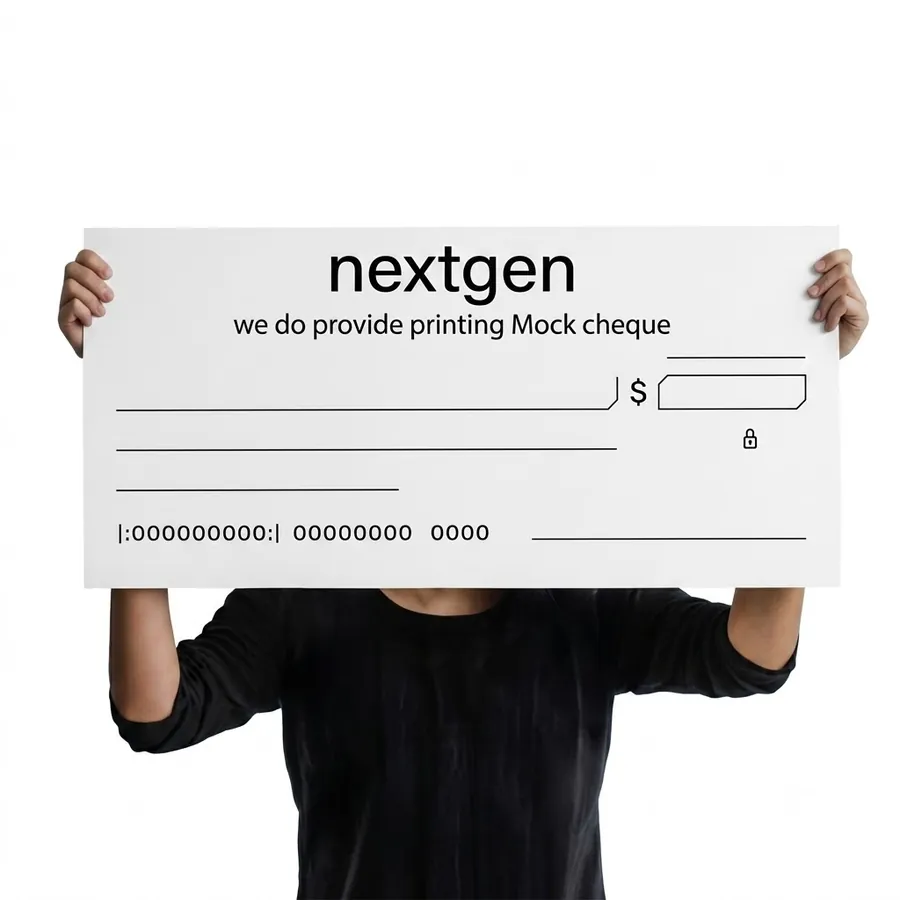
If the launch runs weekly lucky draws over a two- or three-month sales period rather than one event, ask for dry-erase lamination — the same cheque gets wiped and rewritten with a whiteboard marker for each new winner instead of reprinting on every draw date. It's a small spec change that saves several hundred ringgit across a long campaign.
Scale models sell what buyers can't walk into yet
A showflat only ever represents one unit type, fully furnished and lit to flatter. A scale model does the job the showflat can't: it shows the whole site — phase sequencing, which blocks face the pool, how far the corner units sit from the guardhouse, where the future LRT exit will be relative to the project. Buyers who are choosing between floor plans, not just deciding whether to buy at all, spend real time in front of a model, and sales staff use it to answer the objections a brochure can't — "how close is Block C to the main road" is a model conversation, not a floor-plan conversation.
Getting visitors from the carpark to the booking desk
Launch-day traffic is the one day the sales gallery has to convert cold walk-ins, and most of them arrive confused about where to park, where the entrance is, and where the queue for the booking desk starts. Direction signage along the driveway, at lift lobbies and inside the gallery itself removes that friction before a salesperson ever says a word. We usually recommend a simple, consistent colour and arrow system rather than a different design per sign — visitors process directional cues faster when the format repeats.
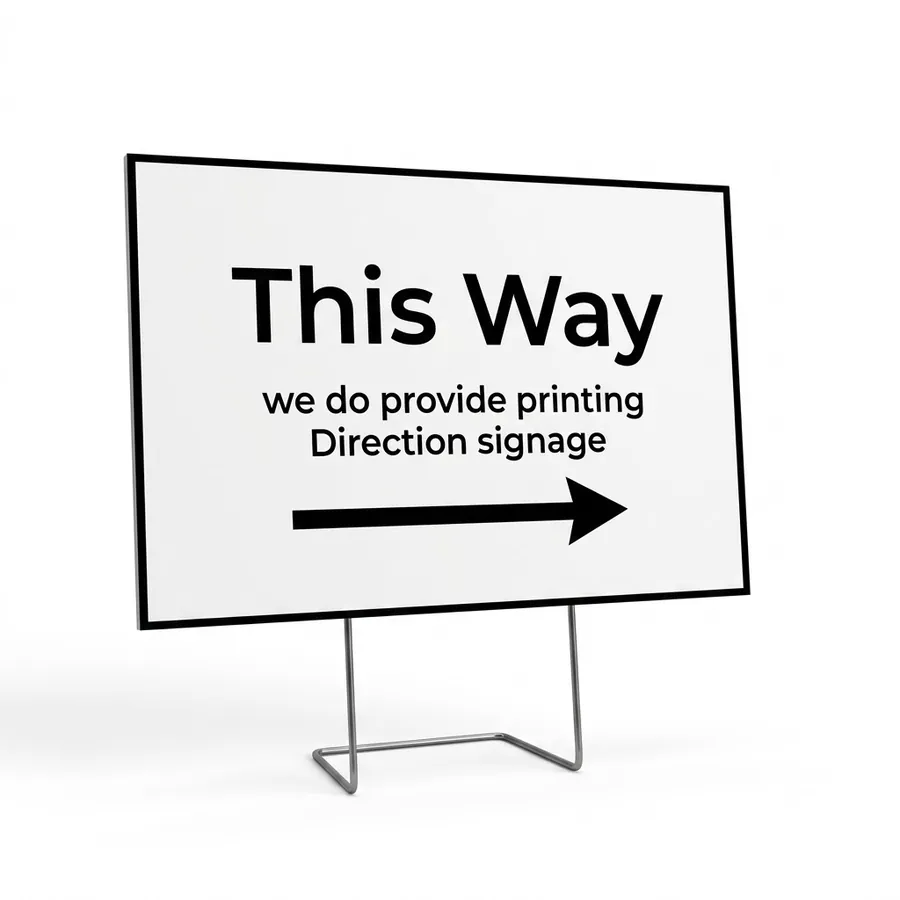
For a comparison of the board materials these signs get printed on — foamboard, PVC or a framed canvas — our indoor signage material guide covers what holds up under repeated handling versus what's meant for a single event.
Jumbo stands, backdrops and the photo wall
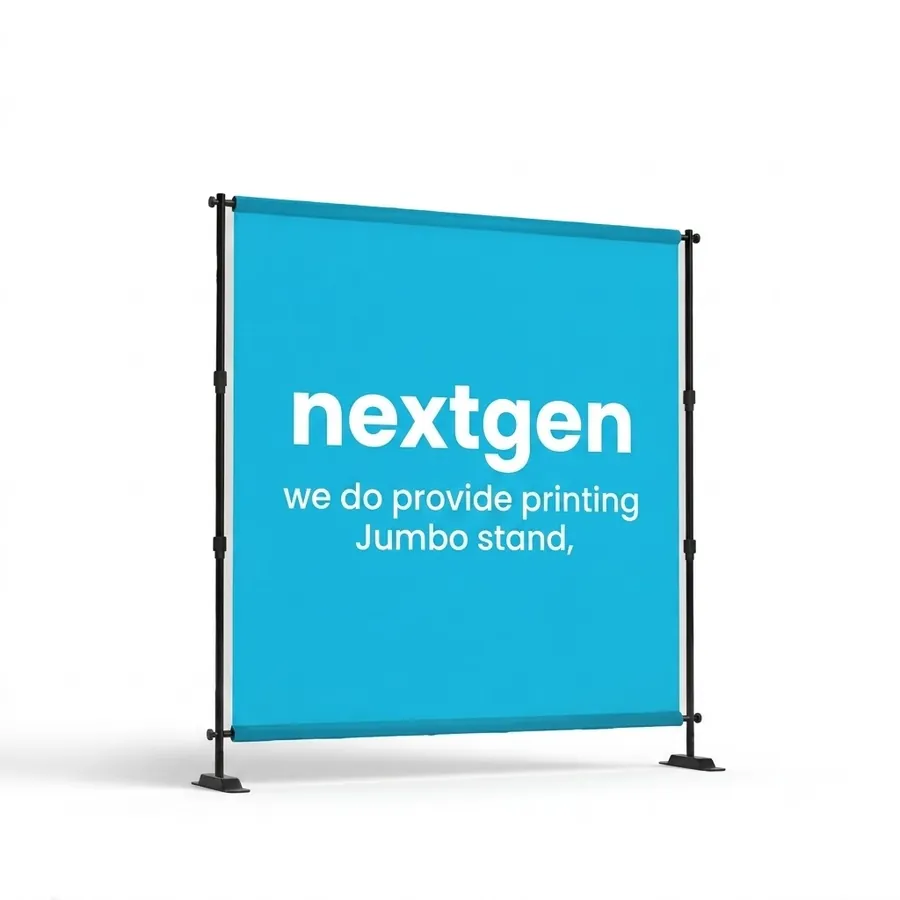
The entrance to a sales gallery needs scale to register from across an atrium or a mall lobby, which is what a jumbo stand is for — a freestanding frame carrying an oversized graphic without drilling into the venue's walls, useful when the launch is hosted in a mall or a rented event space rather than the developer's own building. Pair it with a step-and-repeat backdrop near the booking desk for the agent and buyer photos that inevitably end up on WhatsApp groups the same evening; our backdrop printing guide covers sizing a backdrop so it still reads well once it's been cropped for a phone screen.
A launch-day print checklist
The order we get asked for most, roughly in the sequence it gets used on the day:
- Carpark and driveway direction signage — the first thing a visitor sees, so it needs to survive outdoor glare and weather.
- Entrance jumbo stand or arch banner — tells a mall crowd the launch is happening before they reach the door.
- Scale model plinth and site plan boards — the centrepiece of the gallery floor.
- Step-and-repeat backdrop — near the booking desk, for the photo every closed deal gets.
- Mock cheque — held back until the first lucky draw or rebate announcement.
- Booking desk collateral — floor plan handouts, price lists, loyalty vouchers.
Book before the showflat contractor finishes, not after
Scale models and jumbo stand frames both have longer lead times than most other items on this list — a detailed model can take two to three weeks depending on the site's complexity, and frame stock availability varies by size. The usual mistake is finalising these while the showflat interior is still being fitted out and only sending the print brief once the gallery is nearly ready, which leaves no room for a second draft if the sales team wants a change to unit numbering or a late price revision. If the launch also has a grand-opening component with ribbon-cutting and press, our grand opening printing checklist lays out the fuller list and a working lead-time timeline.
If you're planning a launch and want a quote against your actual floor plan and gallery layout, talk to us — we can usually turn around a full material list and pricing within a day.
我们在巴生谷与柔佛承接过足够多的楼盘开售活动印刷,看到的模式每次都一样:发展商在样板房与内部装修上花了六位数甚至七位数,印刷预算却被当作临时任务,开幕前一周才匆匆下单。这个顺序其实是反的。真正需要的物料清单并不长——大支票、沙盘模型、指示牌、拍照背景板——但正是这些物料,把一个从停车场走进来的访客,推向签下认购书的那一刻。相对于整体开售预算,它们成本不高,但对成交的贡献却不成比例地大。
大支票依然是抽奖环节的主角
每场开售活动最终都会有一个拍照高光时刻——幸运抽奖得主、早鸟回扣、或是介绍朋友买房的老业主奖励——而大支票(Mock Cheque)依然是让这一刻显得正式、而非临时凑数的关键道具。我们用硬板印刷,全彩输出,尺寸经过设计,确保十步之外用手机拍照时,金额与得奖人姓名都清晰可读——这才是真正重要的测试标准,因为这张照片之后会被发到中介的 Instagram 和发展商的 Facebook 专页上。
如果活动是在两到三个月的销售期内每周都有抽奖,而不是单一场次,建议选择可擦写覆膜——同一张支票用白板笔擦写重复使用,不必每次抽奖都重印一张新的。这是个很小的规格调整,但整个活动周期下来能省下不少费用。
沙盘模型卖的是买家还走不进去的空间
样板房永远只能呈现一种户型,而且经过精心布置与灯光美化。沙盘模型做的是样板房做不到的事:呈现整个项目——分期规划、哪一栋朝向泳池、角间单位距离门岗有多远、未来轻轨出口相对项目的位置。真正在几种户型之间犹豫的买家,而不只是在「买不买」之间犹豫的买家,会花不少时间站在模型前研究;销售人员也常靠模型回答宣传册回答不了的问题——「C 座离大路有多近」,这是模型能回答的问题,而不是平面图能回答的问题。
把访客从停车场带到认购柜台
开售当天是销售中心唯一要把大量陌生访客当场转化成交的日子,而大部分人一到现场就搞不清楚该停哪、入口在哪、排队认购要往哪走。沿车道、电梯大堂与展示中心内部设置的指示牌,能在销售人员开口之前就先解决这些困惑。我们通常建议统一色系与箭头样式,而不是每块牌各做各的设计——格式一致,访客读懂指示的速度也更快。
关于这些指示牌该用哪种板材印刷——泡沫板、PVC 板还是画布框——可以参考我们的室内指示板材指南,里面比较了哪种材质耐反复搬动,哪种更适合单次活动使用。
大型展示架、背景板与拍照墙
销售中心的入口需要足够的体量,才能在商场中庭或大堂里被远远看见,这正是大型展示架(Jumbo Stand)的作用——一个无需在场地墙面钻孔的独立支架系统,尤其适合活动办在商场或租赁场地、而非发展商自有建筑时使用。可以搭配认购柜台附近的连续背景板(Step-and-Repeat Backdrop),用来拍摄中介与买家的合影,这类照片当晚几乎必定会出现在各个 WhatsApp 群组里;我们的背景板印刷指南讲解了如何设定尺寸,确保照片被裁切到手机屏幕后依然清晰好看。
开售当天的印刷物料清单
依照当天使用顺序,我们最常被要求准备的物料大致如下:
- 停车场与车道指示牌——访客最先看到的物料,必须能承受户外强光与风雨。
- 入口大型展示架或拱门横幅——让商场人潮在走到门口前,就先知道这里正在开售。
- 沙盘模型底座与项目规划图板——展示中心楼面的核心焦点。
- 连续背景板——设在认购柜台附近,用来拍下每一笔成交都会有的合影。
- 大支票——留到第一场抽奖或回扣公布时才亮相。
- 柜台物料——户型手册、价格表、老业主推荐优惠券。
要在样板房装修完成前预订,而不是之后
清单中的沙盘模型与大型展示架支架,前置时间都比其他物料长——一个细致的模型视项目复杂度可能需要两到三周,支架尺寸的库存供应也会有波动。最常见的失误是:样板房内装还在施工时才敲定这些物料,直到展示中心快完工才发出印刷简报,结果销售团队想改单位编号或临时调整价格时,已经没有二次修改的余地。如果这场开售还包含剪彩与媒体采访等开幕环节,可以参考我们的开幕活动印刷清单,里面有更完整的物料清单与前置时间安排。
如果你正在筹备一场开售活动,想针对实际户型与展示中心布局报价,欢迎联系我们——我们通常能在一天内提供完整的物料清单与报价。