Foamboard, PVC Board or Canvas Frame? Indoor Signage and Display Boards Compared泡沫板、PVC 板还是画布框?室内指示与展示板材对比
Almost every week a client asks us to print an indoor sign or a photo display and has no idea which board to ask for. They usually default to whichever one they saw at a friend's shop opening. That's how a menu board ends up warped after two months, or a company profile display costs three times what it needed to. Foamboard printing is the cheapest and lightest option, but it's not the only one, and picking wrong wastes money either way — too flimsy and it bows within weeks, too heavy-duty and you overpaid for a sign that gets swapped out every quarter anyway.
We print all three boards below in-house, so this isn't a sales pitch for the most expensive option — it's the same breakdown we give walk-in customers before they order.
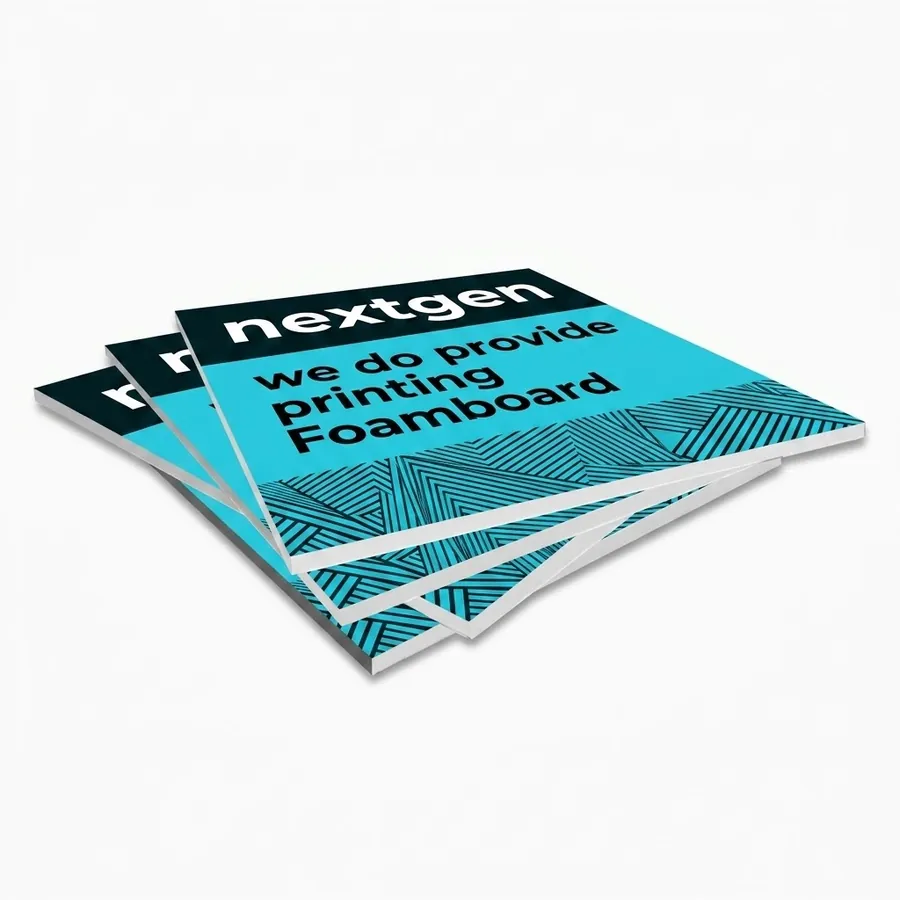
Foamboard: the everyday choice for temporary and light-use signage
Foamboard is a paper-faced polystyrene core, usually 5mm thick. It's light enough to hang with double-sided tape, cuts cleanly for custom shapes, and takes a print finish that looks sharp under indoor lighting. The catch is durability — the paper face dents if you press a fingernail into it, and it's not rated for humidity or outdoor use; leave it near a window with condensation and the face will bubble within days.
Use it for: pop-up event signage, one-off photo boards, retail window displays that rotate monthly, or any sign with a shelf life under six months.
PVC foam board: when the sign needs to survive daily handling
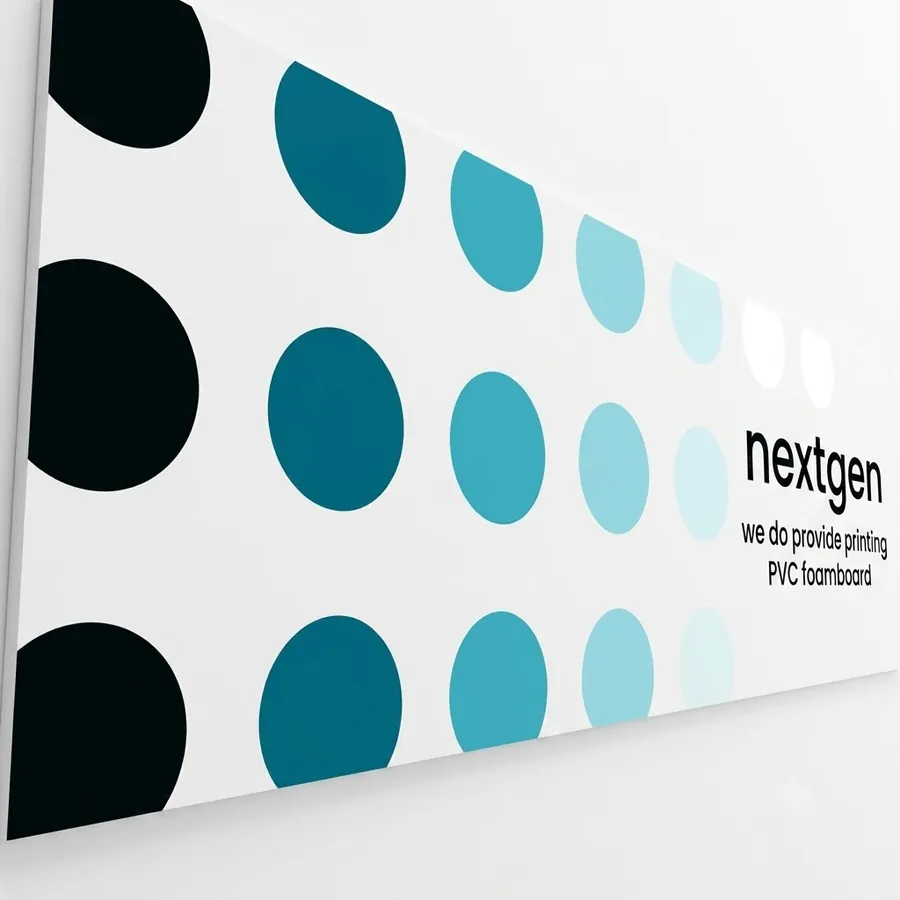
PVC foam board (often sold as Foamex or Sintra) is a solid PVC sheet, typically 3mm–10mm, with no paper face to dent or peel. It's rigid enough to stand unsupported at small sizes, tolerates light moisture, and holds its shape in air-conditioned retail and office environments for years rather than weeks. It costs more per square foot than foamboard — usually somewhere between double and triple — but for anything that gets touched, leaned on, or lives near a doorway, that difference pays for itself the first time someone doesn't have to reprint it.
Use it for: reception signage, permanent menu boards, wayfinding signs, wall-mounted directories, and anything installed with screws or standoffs rather than tape.
Canvas frame: when the sign is also decor
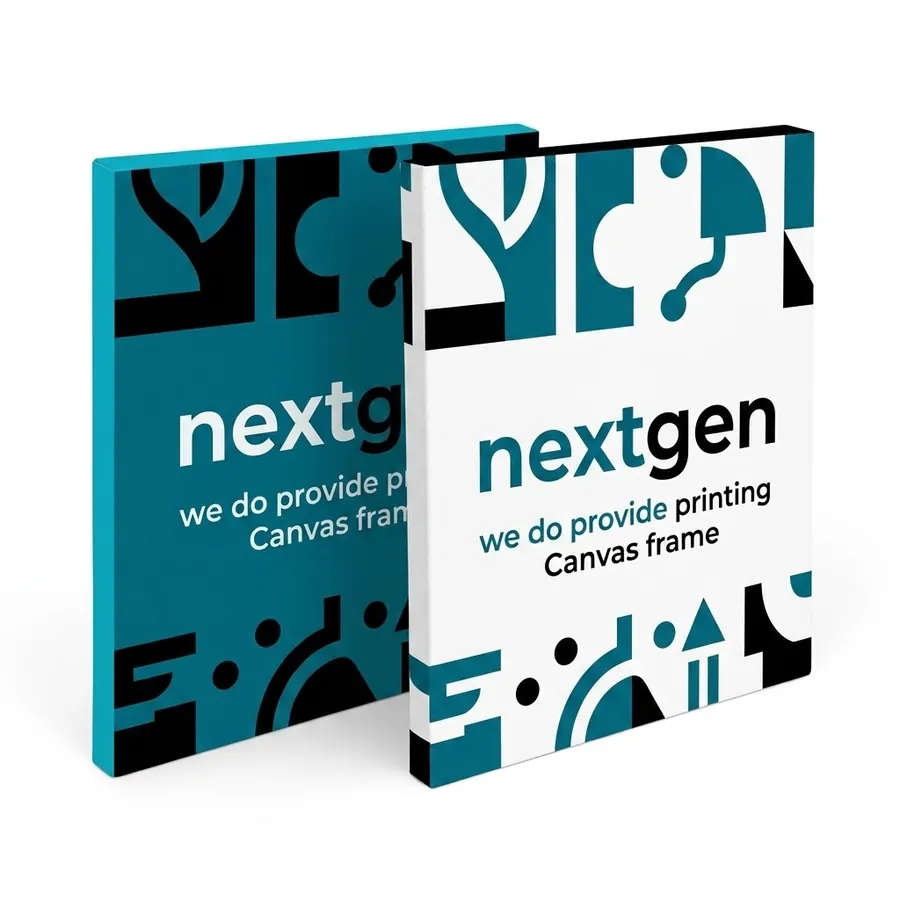
A canvas frame print is a fabric surface stretched over a timber or aluminium frame, and it belongs in a different category entirely — it's for imagery you want to look like art rather than a notice. Restaurants use canvas frames for hero food shots by the entrance, clinics use them for calming lifestyle imagery in waiting areas, and offices use them for company milestones and team photos. The texture reads as premium under any lighting, and unlike foamboard or PVC, nobody mistakes it for a temporary sign — which is exactly the point when the goal is ambience, not instruction.
It's the most expensive of the three per piece and the least practical for text-heavy signage — small print gets lost in the fabric weave, so keep canvas frames to photography, logos and short headlines.
Don't forget the stand
Half the "which board" questions we get are actually "how do I display this without drilling into a wall" questions. A wood easel stand solves that for foamboard and PVC panels alike — it's freestanding, looks intentional rather than improvised, and moves with you if the display is seasonal (a launch this month, a different promotion next month). It's also the cheaper fix compared to reprinting a board in a different size because the first one didn't fit where you wanted to stick it.
- Foamboard — cheapest, lightest, 5mm standard, best under 6 months' use, indoor dry areas only.
- PVC foam board — 2–3x the cost of foamboard, rigid, moisture-tolerant, the default for anything semi-permanent.
- Canvas frame — premium finish, decorative use, avoid for dense text or price lists.
- Wood easel stand — pairs with either board when you need freestanding display without wall fixing.
If you're setting up a new outlet, our grand opening printing checklist covers the other signage most owners forget to order until the week before launch — foamboard and PVC boards both show up on that list for good reason.
Getting the file right before you print
All three boards are unforgiving of low-resolution artwork because they're viewed close-up — unlike an outdoor banner seen from ten metres away, an indoor sign gets read from arm's length. Supply artwork at true size at 150dpi minimum (300dpi if there's fine text), and mount-bleed by at least 3mm if the panel will be trimmed after printing. We check every file before it goes to print and flag anything that will look soft once it's blown up to board size, so you're not finding out after collection.
What we'd order
For a sign that changes every promotion cycle: foamboard, full stop — it's disposable by design and you shouldn't pay PVC prices for something you'll bin in eight weeks. For anything at your entrance, counter or wayfinding that stays up all year: PVC foam board, because the reprint cost of a warped foamboard sign after month three erases the saving. For anything meant to make the space feel finished rather than just labelled: canvas frame. Most outlets that talk to us end up ordering a mix of all three for different spots in the same shop, which is normal — the mistake isn't picking the "wrong" board, it's using one board type everywhere and either overpaying or under-lasting.
几乎每周都有客户问我们该印哪种室内招牌或照片展示板,却完全不知道该指定哪种材质。大多数人默认用朋友开业时看到的那种。结果就是菜单板用两个月就翘曲变形,或者公司简介展示板多花了三倍冤枉钱。泡沫板印刷是最便宜也最轻的选项,但绝不是唯一选择,选错了两边都亏——太薄弱几周就下垂,太重型又为一块每季度就要换的招牌多付了钱。
以下三种板材我们都是自己印刷,所以这不是在推销最贵的选项——这就是我们平时给上门客户讲的同一套判断标准。
泡沫板:临时与轻度使用招牌的日常之选
泡沫板是纸面聚苯乙烯芯材,标准厚度 5mm。它轻到可以用双面胶悬挂,切割custom造型也很干净,印刷效果在室内灯光下相当清晰。缺点是耐用性——纸面用指甲一按就会凹陷,也不耐潮湿或户外使用,放在有冷凝水的窗边几天内表面就会起泡。
适用场景:快闪活动招牌、一次性照片墙、每月更换的零售橱窗展示,或任何使用寿命在六个月以内的招牌。
PVC 泡沫板:招牌需要经得起日常触碰时
PVC 泡沫板(常见品牌如 Foamex、Sintra)是实心 PVC 板材,厚度通常在 3mm 至 10mm,没有纸面,不会凹陷或起皮。小尺寸能自立不需支撑,耐轻度潮湿,在有冷气的零售或办公环境中能维持数年而非几周。它的单位面积成本比泡沫板高,通常是两到三倍,但对任何会被触摸、倚靠或安装在门口附近的招牌来说,这笔差价第一次省下重印费用时就值回来了。
适用场景:前台招牌、永久性菜单板、指示牌、壁挂式目录,以及任何用螺丝或支撑柱固定而非用胶带贴的招牌。
画布框:当招牌也是装饰的一部分
画布框印刷是把布面绷在木框或铝框上,它完全属于另一个类别——适合用来呈现你希望看起来像艺术品而非告示的图像。餐厅用画布框在门口展示招牌菜的美食照,诊所用它在候诊区营造放心的生活感画面,办公室用它展示公司里程碑与团队合影。这种质感在任何灯光下都显得高级,而且不同于泡沫板或 PVC 板,没有人会把它误认成临时招牌——当目标是营造氛围而非传达信息时,这正是重点所在。
它是三者中单件成本最高的,也最不适合文字密集的招牌——小字在布纹纹理中会变得模糊,所以画布框最好只用于摄影图像、标志与简短标题。
别忘了展示架
我们收到的「该选哪种板材」问题,一半其实是「不打墙壁的话该怎么摆放」的问题。木画架能同时解决泡沫板与 PVC 板的展示需求——自立式,看起来比临时凑合更有设计感,而且如果展示是季节性的(这个月做新品发布,下个月换促销),它可以随时移动。相比因为第一块板尺寸不合适想贴的位置而重新印刷,木画架是便宜得多的解决方案。
- 泡沫板——最便宜最轻,标准 5mm,适合六个月内的使用,仅限室内干燥环境。
- PVC 泡沫板——成本是泡沫板的 2–3 倍,坚固耐潮,是任何半永久性招牌的首选。
- 画布框——高级质感,用于装饰性展示,避免用于文字密集或价目表。
- 木画架——搭配任一板材使用,无需上墙固定即可自立展示。
如果你正在筹备新店开业,我们的开业庆典印刷清单整理了大多数店主直到开业前一周才想起要订的其他招牌物料——泡沫板与 PVC 板都在那份清单上,而且是有原因的。
印刷前先把文件准备好
这三种板材对低分辨率稿件都毫不留情,因为它们都是近距离观看的——不像户外横幅在十米外看,室内招牌通常在手臂距离内被阅读。请提供按实际尺寸、至少 150dpi 的稿件(若有细小文字则需 300dpi),若印刷后需要裁切,出血位至少预留 3mm。我们在印刷前都会检查每份文件,若放大到板材尺寸后会模糊会提前告知,而不是等你取货才发现。
我们会怎么选
如果招牌每次促销周期都要更换:直接选泡沫板——它本来就是消耗品,不该为一块八周后就丢掉的东西付 PVC 板的价格。如果是入口、柜台或全年不换的指示牌:选 PVC 泡沫板,因为泡沫板用到第三个月翘曲后的重印成本,早就超过了当初省下的差价。如果目标是让空间看起来完整而不只是贴了标签:选画布框。找我们的大多数店家最后都会在同一间店里混用三种板材,这很正常——问题不在于选错了「哪一种」,而在于整间店只用一种板材,结果不是多花钱就是撑不久。