Shop Signboards in Malaysia: Front-Lit, Back-Lit, Lightbox or Neon?马来西亚店面招牌:正打光、背打光、灯箱还是霓虹?
Ask ten shop owners along a retail row in Puncak Alam or Petaling Jaya why they picked the signboard they have, and most will tell you the contractor recommended it that week. We'd rather you decide based on what the sign actually has to do — front-lit, back-lit, lightbox and neon signboard printing in Malaysia all read differently, cost differently to run, and suit different shoplots. Here is how we walk clients through the choice.
Front-lit signage — the default for a reason
Face-lit 3D letters with LED modules behind an acrylic face are still the most common shop sign in Malaysia, and for good reason: they read clearly in full daylight and stay bright at night, which is exactly what a ground-floor retail lot competing with five neighbours needs. The letters are metal-backed acrylic, the LEDs sit behind the face, and a straightforward front-lit signage installation runs for years on a modest electricity draw. If your priority is simply "seen from the five-foot way, day and night," start here — it is the option least likely to disappoint you.
Back-lit signage — quieter, and it reads as premium
Back-lit (halo) letters glow from behind rather than the front, throwing a soft ring of light around stainless steel or aluminium characters instead of lighting the face itself. It is dimmer than front-lit and costs more to fabricate, but it is also the look clinics, hotel lobbies, corporate offices and boutique retailers reach for when they want "expensive" over "loud." We tell clients: if your shop competes on being noticed from across the car park, don't pick back-lit signage — it will lose. If your shop competes on being noticed by the right customer up close, it usually wins.
Lightbox — the sign that works a second shift
A lightbox is a frame — usually aluminium — with even LED backlighting behind a translucent print, most often used for a shopfront panel, a menu wall or a feature box beside the entrance. The part people get wrong is the print film: an ordinary sticker or banner output looks washed out or patchy once the light comes on behind it, because it was never designed to be lit from behind. Lightbox sticker film is engineered specifically for this — colour density is built up so the image still reads correctly with a light source behind it, not just in front of it.
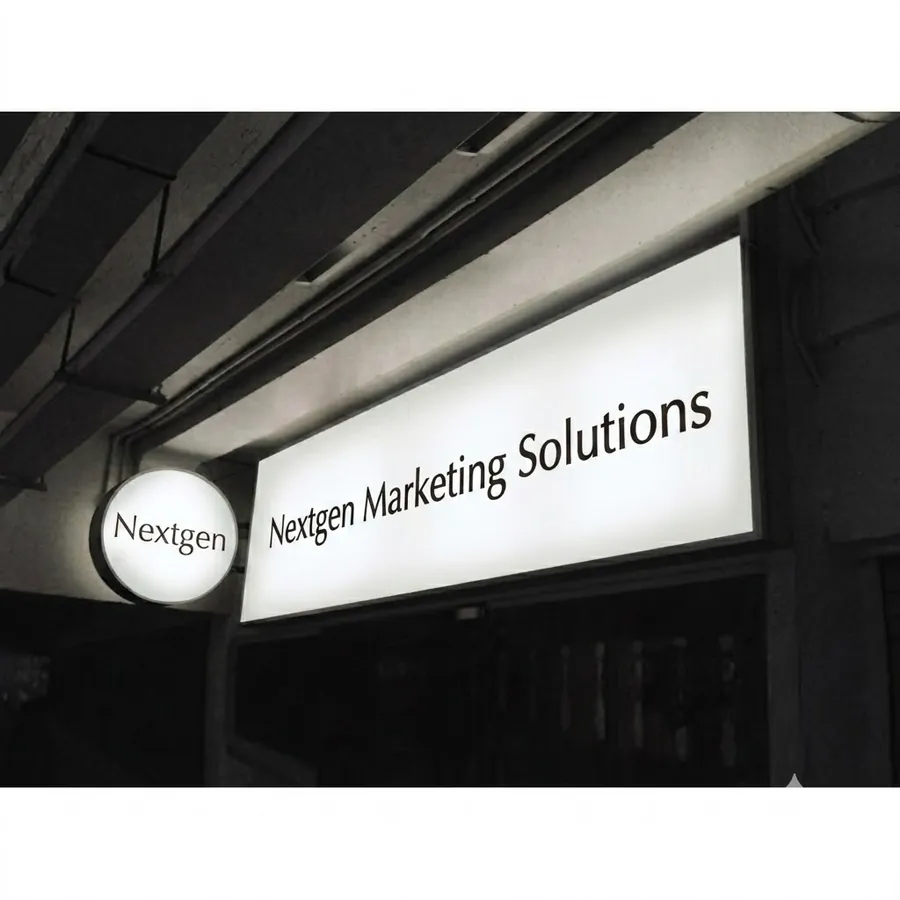
A lightbox signage structure is a good middle option between full illuminated letters and just hanging a poster: it reads well after dark, costs less to fabricate than back-lit letters, and the printed face can be swapped for a new promotion without touching the frame or the wiring.
LED neon — for the corner people photograph, not the corner they read from the road
LED neon flex bent into script or shapes is the café-wall and photo-corner favourite, and it is a genuinely different product from the other three — it is decorative, not a street-readable identifier. It costs a fraction of glass neon, runs cool enough to be safe indoors, and comes in dimmable colour options. What it is not: a shop sign a driver reads from fifty metres. Use neon light signage for the accent wall, the photo corner, the bar backdrop — and one of the three signboard types above for the actual street identity.
Permits, running cost and the wait in between
Most local councils (PBT) require a signboard licence application, and depending on the council and the season, approval can take anywhere from a couple of weeks to over a month — longer if the drawings need revision. We prepare the technical drawings the application needs; the licence itself is applied for under your business name. Running cost is rarely the deciding factor between the four types — LED draws little power across the board. The real cost difference shows up in fabrication (letters and metalwork cost more than a printed lightbox face) and in maintenance access (a lightbox face is easy to swap; back-lit halo letters are not).
Signage doesn't stop at the shopfront
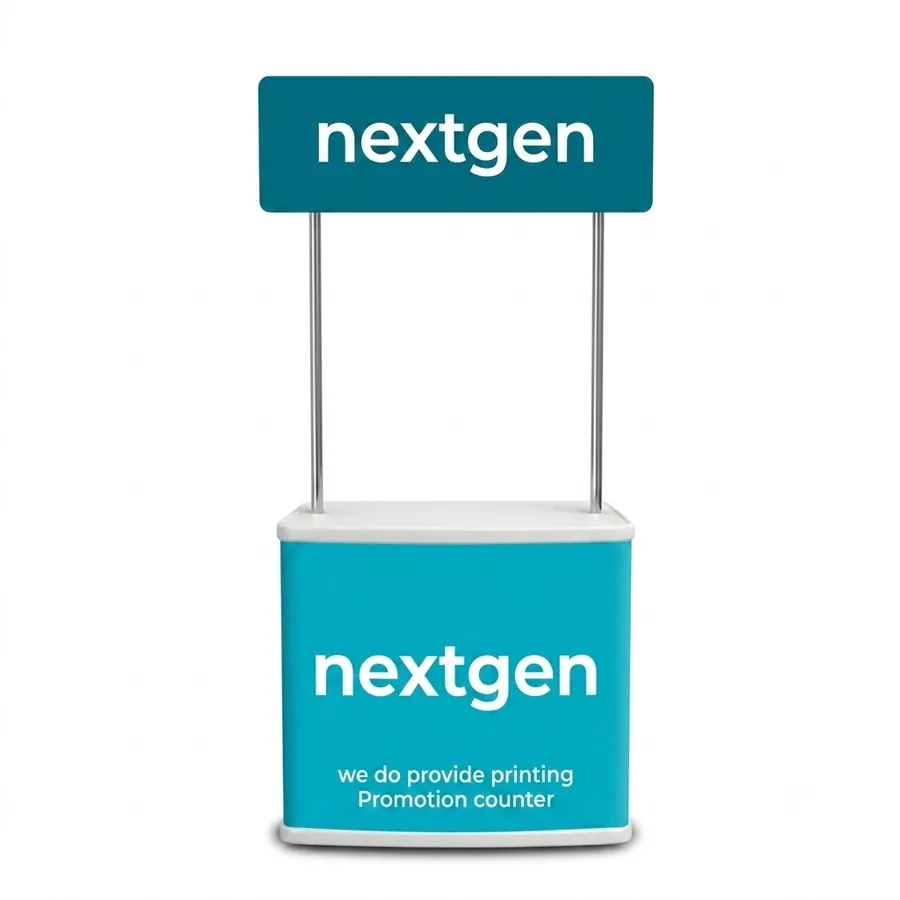
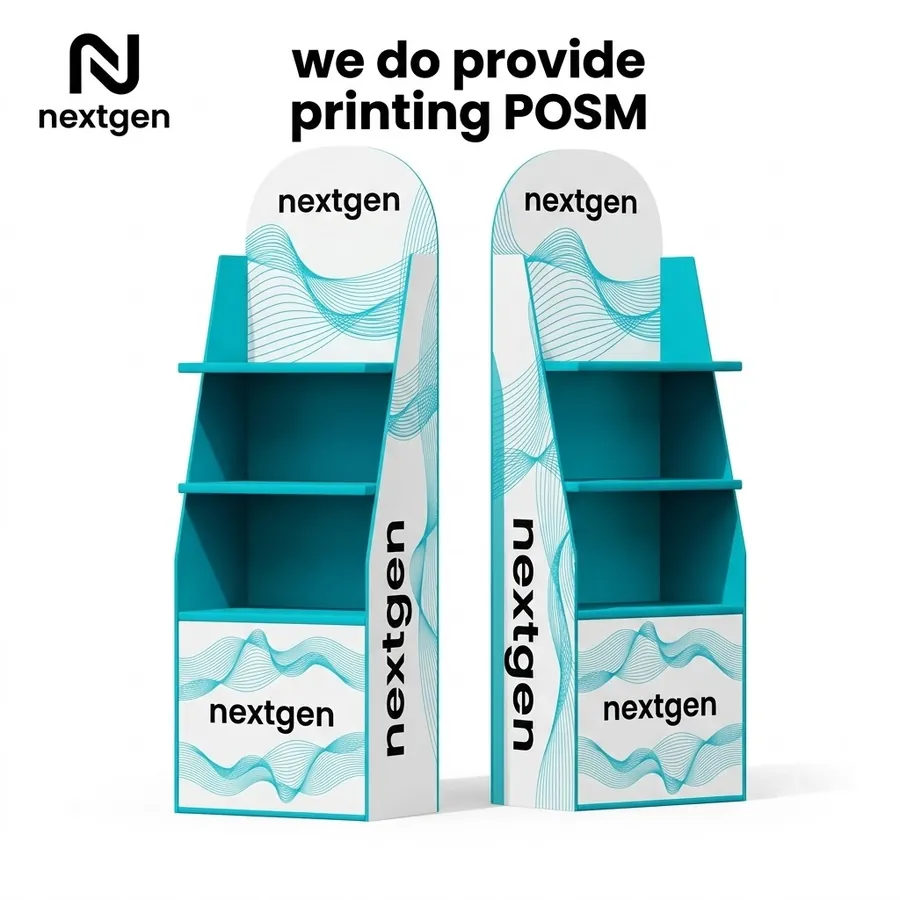
The signboard's job is to get someone through the door; what keeps the branding consistent once they're inside is a separate, smaller job that's easy to forget. Point-of-sale material — shelf strips, counter toppers, dividers — carries the same logo, colours and typography from the shopfront into the aisle, so the shop doesn't feel like two different businesses depending on which side of the door you're standing.
Choosing signboard printing in Malaysia: a decision checklist
- Ground-floor shop competing on street visibility → front-lit signage
- Clinic, office, hotel or boutique wanting a premium, quieter look → back-lit signage
- Shopfront panel, menu wall or entrance feature that needs to work after dark → lightbox, printed on proper lightbox film
- Café wall, photo corner or bar backdrop → LED neon signage
- Budget genuinely undecided → get a fabricator to quote all four against the same brief; the price gap is often smaller than expected once installation and wiring are included
Where to start
We handle shopfront and building signage from measurement to switch-on — drawings for your PBT application, fabrication and installation, usually finished in a day for a standard shoplot. If you're also planning your indoor display for launch day, our guide to portable display stands covers the pieces that don't need a permit at all. Send us your shoplot photo and a rough size and we'll tell you honestly which of the four fits — before you commit to fabrication.
随便问巴生谷或武吉加里尔哪条零售街的十个店主,为什么招牌长这样,多数答案是「那周承包商推荐的」。我们更希望你根据招牌真正要做的事来决定——正打光、背打光、灯箱与霓虹这几种招牌印刷在马来西亚各自的亮法、耗电与维护方式都不一样,也适合不同类型的店面。以下是我们平常怎么帮客户拿主意的。
前打光招牌——依然是默认选项,有它的道理
LED 模组正面点亮的立体字,是马来西亚最常见的店面招牌,原因很实际:白天清晰、夜晚够亮,这正是与五六家邻店抢眼球的地铺需要的。字体是金属围边配亚克力面板,LED 藏在面板背后,一套正常的正面发光招牌能撑上好几年,耗电也不高。如果你要的只是「五脚基外走过、日夜都看得到」,从这里开始最稳妥——它是最不容易让人失望的选项。
背打光招牌——安静一点,看起来更高级
背打光(光晕)字体不是从正面发光,而是从背后透出一圈柔光,勾勒出不锈钢或铝制字体的轮廓,而不是照亮整个字面。它比前打光暗、制作成本也更高,但这正是诊所、酒店大堂、办公室与精品零售想要「高级」而非「抢眼」时会选的效果。我们会跟客户说:如果你的店要在停车场那头就被看到,别选背发光招牌——它会输。如果你的店是要让走近的对的客人留意到,它通常会赢。
灯箱——日落后还继续上班的招牌
灯箱是一个框架——通常是铝合金——里面装了均匀的 LED 背光,透过半透明画面打光,最常用在店面面板、餐牌墙或入口旁的形象箱。大家常搞错的是印刷用的画面:普通贴纸或帆布输出一旦背后打光,颜色会发灰或深浅不一,因为它本来就不是为背光设计的。灯箱贴纸就是专门为这种用途开发的——透过加厚色层,让画面在背后有光源、而不只是正面有光的情况下,依然显色准确。
灯箱招牌结构,是整套发光字体与单纯挂一张海报之间的折衷方案:入夜后依然清楚,制作成本比背打光字体低,而且要换促销画面时,只需要更换印刷面,不用动到框架或电线。
LED 霓虹灯——给拍照打卡的角落,不是给马路上读招牌的角落
弯成手写字或图形的 LED 霓虹软管,是咖啡馆打卡墙与拍照角落的宠儿,而且它本质上和前面三种是不同的产品——它是装饰性的,不是给街上辨识用的招牌。它的成本只是玻璃霓虹的一小部分,运作温度低到可以安全用在室内,还有可调光的多种颜色可选。它做不到的是:让开车经过的人在五十米外就读懂你的店名。把霓虹灯招牌用在氛围墙、拍照角落、吧台背景——真正的店面身份,交给前面三种招牌之一。
执照、耗电与中间那段等待期
多数地方政府(PBT)都要求申请招牌执照,视地区与季节而定,审批可能只需要两三个星期,也可能拖到一个多月——图纸需要修改的话会更久。我们负责准备申请所需的技术图纸;执照本身以贵司名义申请。四种招牌的耗电差异其实不是决定因素——LED 本身都很省电。真正的成本差异在制作(立体字与金属工艺比印刷灯箱面贵)与维护便利性(灯箱面容易更换,背打光字体则不然)。
招牌的工作,不是走到店门口就结束
招牌的任务是把人带进门;进门之后品牌观感是否一致,是另一件容易被忽略、但规模小得多的工作。POSM 卖场陈列物料——货架条、柜台顶牌、分隔条——把招牌上的同一套标志、色彩与字体延续到货架间,让顾客不会觉得门内门外是两家不同的店。
马来西亚招牌印刷怎么选:一份决策清单
- 地铺、靠街道能见度竞争 → 前打光招牌
- 诊所、办公室、酒店或精品店,想要高级安静的效果 → 背打光招牌
- 店面面板、餐牌墙或入口形象箱,需要入夜后也能用 → 灯箱,搭配专用灯箱贴纸印刷
- 咖啡馆墙面、拍照角落或吧台背景 → LED 霓虹招牌
- 真的还没想好预算 → 请厂商就同一份需求把四种都报价一次;把安装与接电都算进去后,价差往往比想象中小
从哪里开始
我们承接店面与建筑招牌,从丈量到亮灯全包——准备 PBT 申请所需的图纸、制作与安装,标准地铺通常一天完成。如果开业当天还要准备室内展示架,我们的便携展示架指南整理了完全不需要执照的那些选项。把店面照片与大概尺寸发给我们,投入制作前,我们会如实告诉你四种里哪个最适合。