Why Unit Prices Drop When You Print More: Offset vs Digital Explained为什么印越多单价越低:胶印与数码印刷的差别
Every business owner runs into this at some point: you ask for a quotation on 100 name cards and get RM120, then ask for 500 and it comes back at RM180. The per-piece price just dropped from RM1.20 to RM0.36, and nothing about the job changed except the quantity ordered. This isn't a sales trick — it's how printing price in Malaysia actually works, and once you understand it you'll stop overpaying for a quantity that doesn't make sense, and stop underordering into a second production run you didn't need.
Every print job has two kinds of cost
A print quotation is really two numbers added together: a fixed cost that doesn't change no matter how many pieces you order, and a variable cost that scales with every extra piece. The fixed cost covers machine setup, colour calibration, and — for offset jobs — making the printing plates. The variable cost is just paper, ink and finishing per piece, which barely moves. Order more units and the fixed cost gets divided across a bigger batch, so the average price per piece drops. Order fewer, and that same fixed cost gets spread thin, so each piece carries a heavier share of it. That's the entire mechanism behind "bulk printing discount" — there's no discount at all, just arithmetic.
Offset vs digital printing: what's actually different
Offset printing transfers ink from a metal plate to a rubber blanket to the paper. Making those plates — one per ink colour — takes real setup time and cost before a single sheet runs, but once the press is calibrated and running, each additional sheet is extremely cheap. That's why offset rewards volume: the fixed cost is high, the variable cost is low. Digital printing skips plate-making entirely — the design goes straight from file to toner or inkjet head — so there's almost no setup cost, but the per-piece cost stays roughly flat regardless of quantity. Digital also does something offset can't: variable data, where every single piece can be different (numbered tickets, personalised names, different QR codes) without slowing the run down.
Where the crossover sits, by product
The quantity where offset becomes cheaper than digital isn't fixed — it depends on the product's plate complexity and paper. From what we quote weekly:
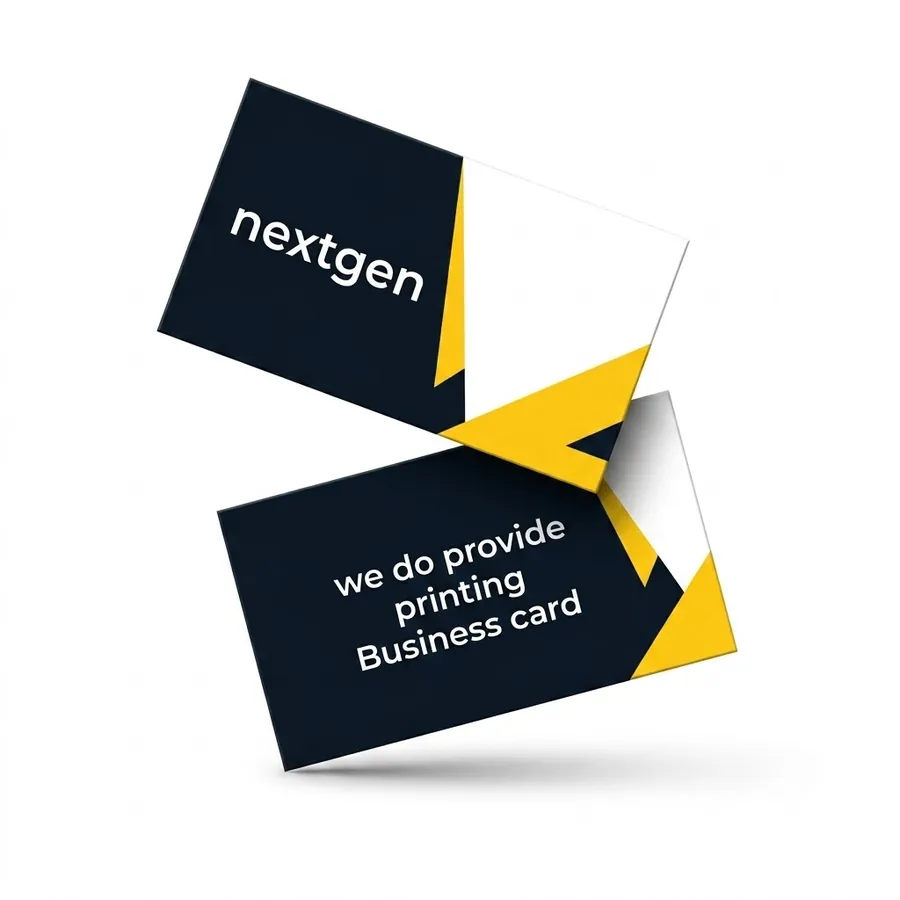
- Business cards — digital wins below roughly 500–1,000 pieces; a corporate order for the whole sales team, or a reorder run into the thousands, usually crosses into offset territory.
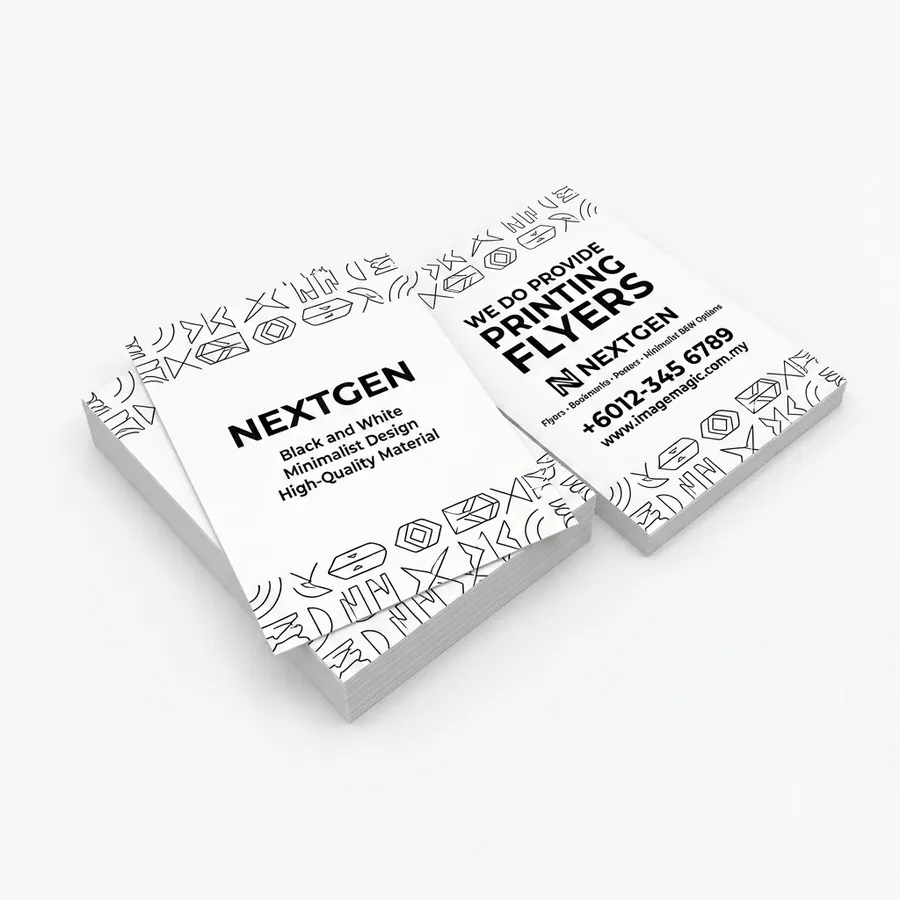
- Flyers and single-sheet marketing material — the crossover typically sits around 1,000–3,000 pieces, shifting lower if the design uses fewer colours or a simpler paper stock.
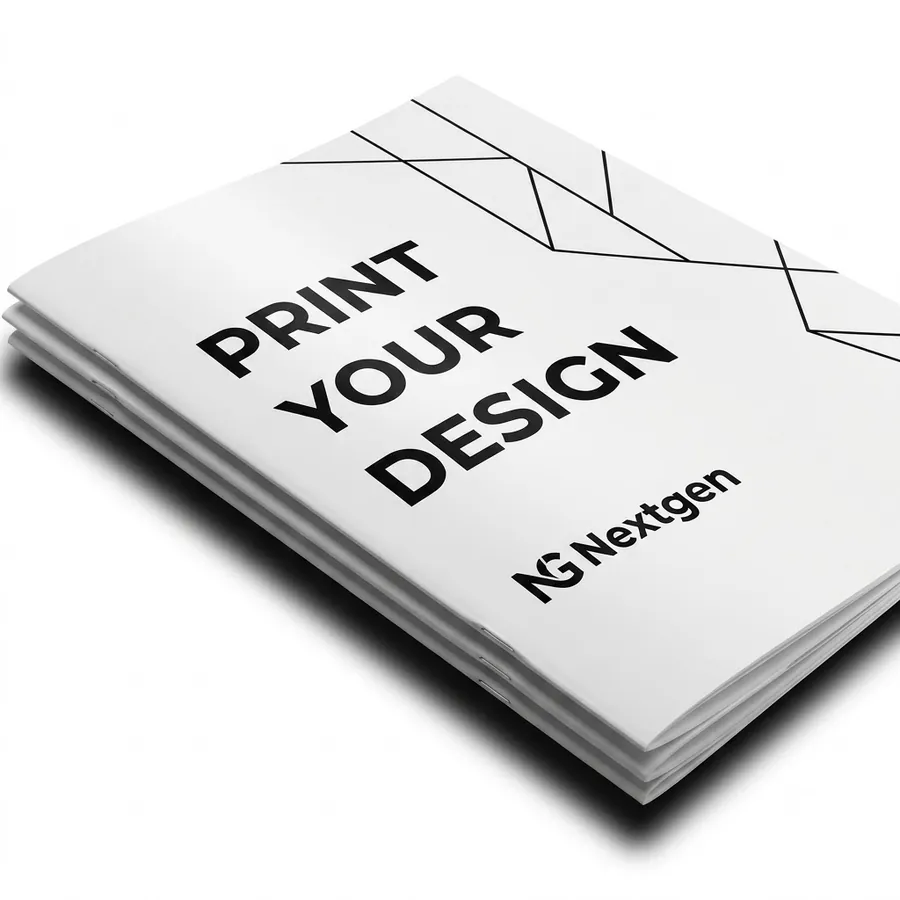
- Booklets and multi-page items — offset needs a full plate set per signature, so the fixed cost is higher again; short runs under ~200 copies, or projects where content changes between versions, are almost always cheaper on digital.
- Stickers and labels — often printed digitally even at moderate volumes because of the die-cutting and material variety involved, unless the order is a single large reorder of one design.
These ranges move with paper choice, colour count and finishing, which is exactly why a proper quotation — not a rule of thumb — should decide it. If you're ordering a business card reorder alongside a company profile booklet, ask for both on the same quotation; the two jobs sit on different sides of the crossover and pricing them together avoids surprises.
How to read a quotation without getting surprised
A clear print quotation should break down into line items you can actually check, not just a single total. Ask your printer for:
- Setup or plate fee — a one-time charge that should stay flat whether you order 100 or 1,000.
- Per-unit cost — the price per piece at the quoted quantity, so you can compare it against other quantities.
- Finishing charges — lamination, binding, die-cutting or foiling, usually quoted separately since they don't scale the same way as printing itself.
- Minimum order quantity — many products have one, and ordering just under it can cost more per piece than ordering the minimum.
- Delivery or rush fee — especially relevant if your event date is fixed and there's no room for a reprint.
If a supplier won't give you a tiered price table (for example, cost at 100 / 300 / 500 / 1,000 pieces), ask for one anyway — seeing the actual numbers side by side tells you exactly where your order sits relative to the offset-digital crossover, instead of guessing.
Ordering smarter, not just bigger
More pieces isn't automatically the smarter order. If your phone number, address or promotion is likely to change in the next few months, a smaller digital run that avoids waste beats a big offset run sitting half-used in a storeroom. On the other hand, if you're reordering the same design every quarter — booklets, stationery, standard packaging — batching a year's worth into one larger offset run usually beats several small digital reprints on total cost. A middle path many of our clients use: print a moderate offset run for evergreen material, keep the artwork file ready, and top up with a fast digital reprint if you run out early. Keeping your file genuinely print-ready also avoids costly delays at reprint time — our guide on preparing print-ready artwork covers the bleed, resolution and colour mode checks that most often hold up a second run.
Get a quotation that actually makes sense
Tell us the product, the quantity you think you need and how often you'll reorder, and we'll quote it at the method that's genuinely cheaper for your situation — not the one that's easier for us to run. Talk to us for a tiered quotation before you commit to a number.
几乎每个生意人都遇过这种情况:问 100 张名片的报价,答案是 RM120;再问 500 张,报价却是 RM180。单价从 RM1.20 直接降到 RM0.36,而这份订单除了数量之外什么都没变。这不是促销话术,而是马来西亚印刷价格真实的运作方式——搞懂它之后,你就不会为不合理的数量多付钱,也不会因为订少了而多跑一次生产。
每一份印刷订单都有两种成本
一份印刷报价,其实是两笔费用相加:不随数量变化的固定成本,以及随每多印一件而增加的变动成本。固定成本包含机器上机、颜色校准,以及胶印特有的制版费用。变动成本则只是纸张、油墨与后加工的单件费用,波动很小。订得越多,固定成本被摊分到的件数就越多,平均单价自然下降;订得越少,同样的固定成本被摊得更薄,每件要背负的比例就更高。这就是「大量印刷折扣」背后的全部原理——其实根本没有折扣,只有算术。
胶印与数码印刷:真正的差别在哪
胶印是把油墨从金属版转印到橡皮布,再转印到纸张上。制版——每种油墨颜色一块版——在开印前就要花真金白银与时间,但一旦上机校准完成,之后每多印一张的成本都极低。这就是为什么胶印「印越多越划算」:固定成本高,变动成本低。数码印刷完全跳过制版这一步——设计稿直接从档案送进碳粉或喷墨印字头——所以几乎没有上机费用,但每件的成本无论数量多寡都相对持平。数码印刷还有一项胶印做不到的能力:可变数据印刷,让每一件都不一样(编号票券、个人化姓名、不同的二维码),而且不会拖慢印刷速度。
不同产品的交叉点在哪里
胶印比数码更划算的数量门槛并不是固定的,要看产品的制版复杂度与纸材而定。以我们每周处理的报价为例:
- 名片——约 500 至 1,000 张以下用数码更划算;整个业务团队的企业订单,或补货到上千张,通常就跨进胶印的区间。
- 传单与单张营销物料——交叉点大约在 1,000 至 3,000 张之间,若设计用色更少或纸材更简单,门槛还会再往下移。
- 画册与多页物料——胶印每一叠帖都要一整套版,固定成本又更高;印量低于约 200 本,或内容会因版本而变动的项目,几乎都是数码更省。
- 贴纸与标签——即使数量中等,也常常用数码印刷,因为牵涉到裁形与材质的多样性,除非是单一设计的大量补货。
这些区间会随纸材、用色数与后加工而变动,所以真正该由完整报价来决定,而不是靠经验法则。如果你要同时补货名片与制作公司简介画册,建议放进同一份报价单一起问——这两种产品刚好落在交叉点的两侧,一起报价才不会有意外。
怎么看懂报价单,不被吓一跳
一份清楚的印刷报价,应该拆成可以逐项核对的项目,而不是只有一个总价。请印刷厂列出:
- 上机/制版费——一次性费用,不论订 100 件还是 1,000 件都应该维持不变。
- 单件成本——该数量下每件的价格,方便你与其他数量对比。
- 后加工费用——覆膜、装订、模切或烫金,通常独立报价,因为它们不会跟印刷本身以同样比例摊分。
- 最低起订量——许多产品都有门槛,订在门槛之下反而可能比订到门槛本身单价更贵。
- 送货或加急费——如果活动日期已经定死、没有重印的余裕,这一项特别重要。
如果供应商不愿意提供分级报价表(例如 100 / 300 / 500 / 1,000 张各自的价格),也要主动要求——把实际数字并排看,才知道你的订单落在胶印与数码交叉点的哪一侧,而不是靠猜。
订得聪明,而不是订得更多
印更多不等于订得更聪明。如果你的电话、地址或促销内容接下来几个月可能会改,那小批量的数码印刷、避免浪费,会比一大批用不完、堆在仓库的胶印订单更划算。反过来说,如果你每季都要补同一款设计——画册、文具、标准包装——把一整年的用量并成一次较大的胶印订单,总成本通常会低于分好几次小批量数码补货。我们不少客户采用的折衷做法是:为常年通用的物料先印一批适量的胶印,把档案备好,提前用完时再用数码快速补货。让档案随时保持真正可印刷的状态,也能避免补货时被延误——我们的印前稿件准备指南讲清楚了出血、解析度与色彩模式这几个最常拖慢二次印刷的问题。
拿一份真正合理的报价
告诉我们产品、你预估需要的数量,以及大概多久补货一次,我们会用真正适合你情况、而不是对我们最方便的方式报价。联系我们,在你决定数量之前先拿到一份分级报价单。