Mall Roadshow Booth Printing: What to Order for a Booth That Stops Traffic商场路演摊位印刷:让人停下脚步的摊位该订什么
We've printed the booth material behind roadshow lots in Sunway Pyramid, IOI City Mall, Aeon and a string of smaller malls across the Klang Valley, and the same mistake shows up almost every time: the client spends most of the budget on a backdrop that photographs beautifully and almost nothing on the two square metres of floor where a shopper actually decides to stop. Roadshow booth printing in Malaysia isn't one product — it's four or five pieces that each do a different job, and getting the order wrong is the difference between a booth that looks good in the recap photos and one that actually pulls foot traffic off the walking path.
The three-second problem
A shopper walking past your lot has roughly three to four seconds before their eyes move on to the next storefront, the escalator or their phone. In that window your booth has to answer one question — "why should I stop?" — without anyone reading a single word of copy. That's a job for shape and motion, not paragraphs: a counter tall enough to see over the crowd, a wheel that's visibly spinning, staff standing rather than sitting behind a table. Every piece you print for the booth should be judged against that three-second test before it's judged on how it looks in a design mock-up.
The core roadshow booth print list
For a standard 3m x 3m mall lot, we tell clients to budget for four pieces before anything else — a retail counter, directional stands, an engagement mechanic, and a small giveaway. A printed backdrop or bunting matters too, but on its own it only works from far away; up close, these four do the actual converting.
- Promotion counter — your staff station, till point and visual anchor in one. It's usually the first solid object a shopper's eyes land on because it's the tallest thing at eye level inside the lot.
- A-stand — placed on both flanks of the lot, these catch shoppers approaching from either direction of the atrium, not only the ones walking straight at your counter.
- Lucky wheel stand — the single biggest lever for stopping power we've seen across dozens of roadshow bookings. A game beats a static product table almost every time.
- Hand fans or small giveaways — the piece that leaves the booth in the shopper's hand and keeps working long after the event is packed down.
Promotion counter vs A-stand: which earns its space first
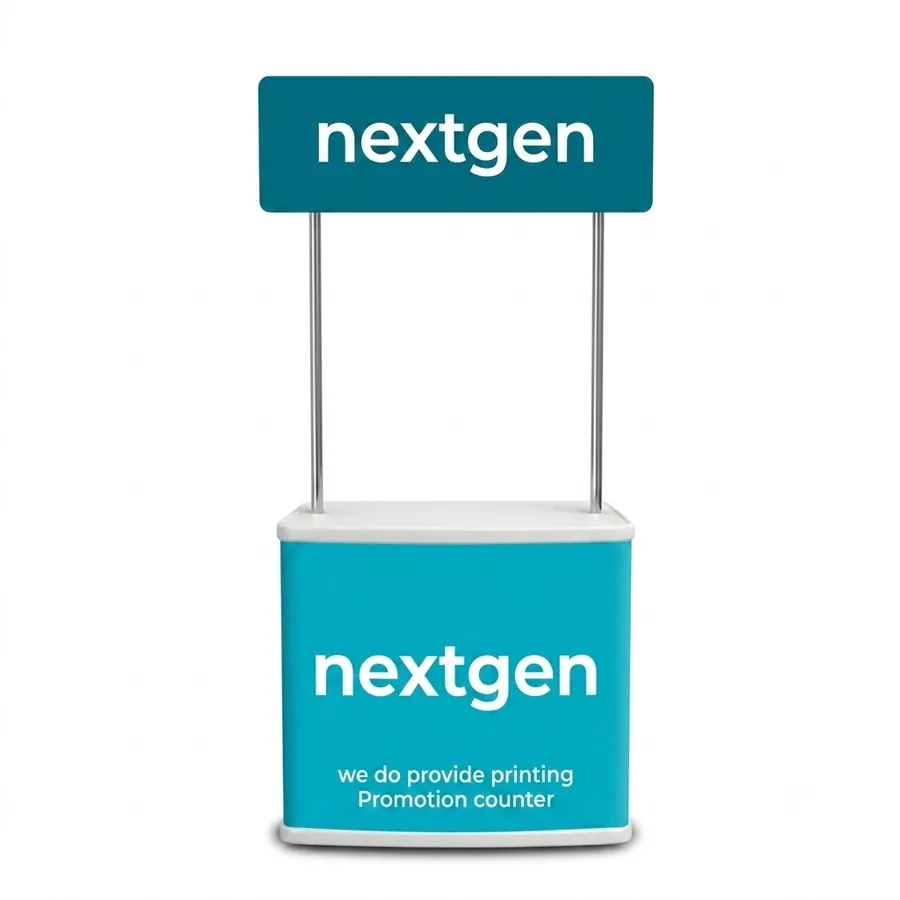
The promotion counter comes first because it has to do three jobs at once: hold your till or tablet, brand the booth from ten metres away, and give staff somewhere to stand that isn't awkwardly empty air. Get the height right — too low and it disappears behind the crowd; too tall and it reads as a barrier rather than an invitation. We usually print the counter face in your two or three loudest brand colours and keep the product photography for the A-stands instead, so the counter reads as a shape first and a message second.
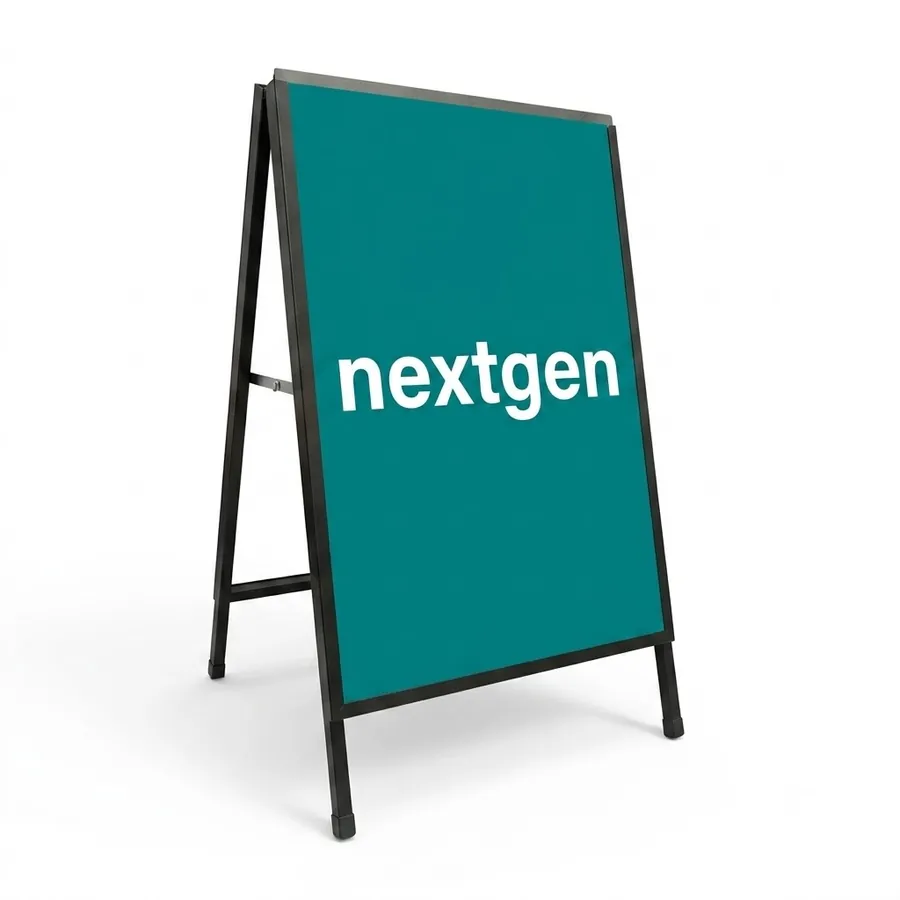
A-stands do the opposite job — they widen your catchment. A counter alone only faces one direction; two A-stands angled outward mean shoppers walking from either end of the corridor see a message before they've even reached the lot. Print the offer or hook on the A-stand, not the brand name — "Try before you buy" pulls a stranger closer than a logo does.
Why a lucky wheel stand outperforms a static product table
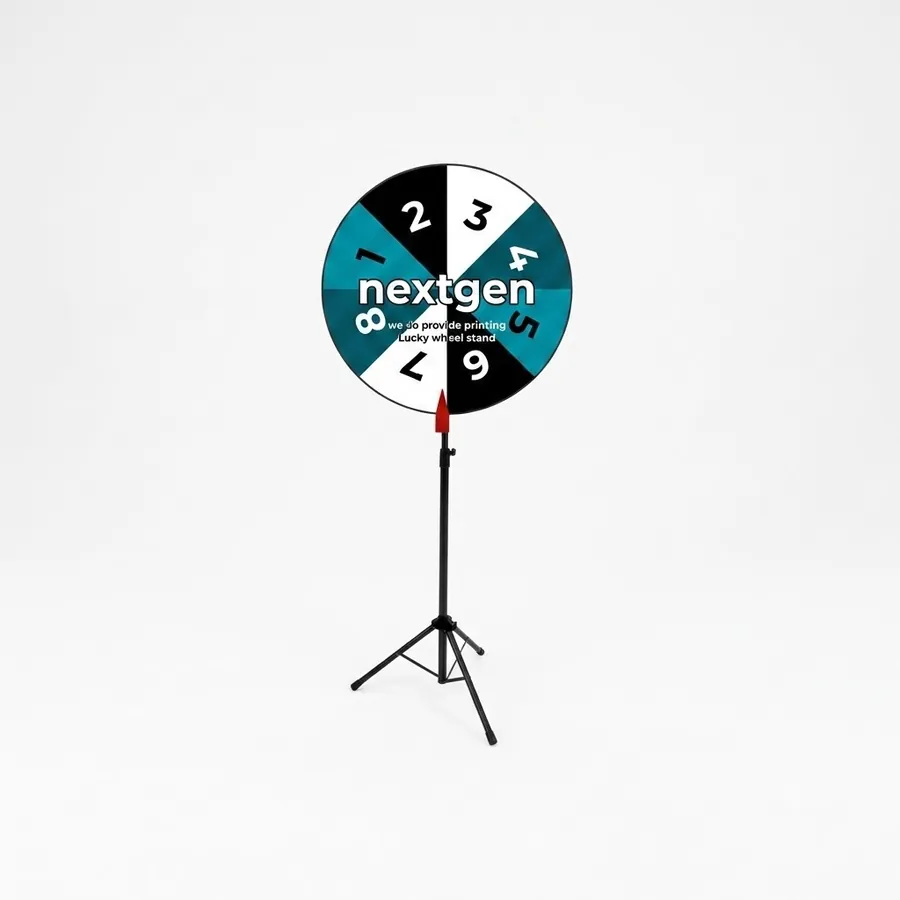
Product tables ask a shopper to become a customer immediately, which most people walking past aren't ready to do. A lucky wheel asks something smaller — spend fifteen seconds, maybe win something — and that lower ask is what actually gets feet to stop moving. Once someone is standing at your booth spinning a wheel, the pitch happens naturally while they wait to see what they've won. Make sure every segment on the wheel gives something, even if it's a small discount or a follow-on-social entry — a wheel that mostly says "try again" trains people to walk off annoyed instead of engaged.
Small giveaways that keep your brand in someone's bag
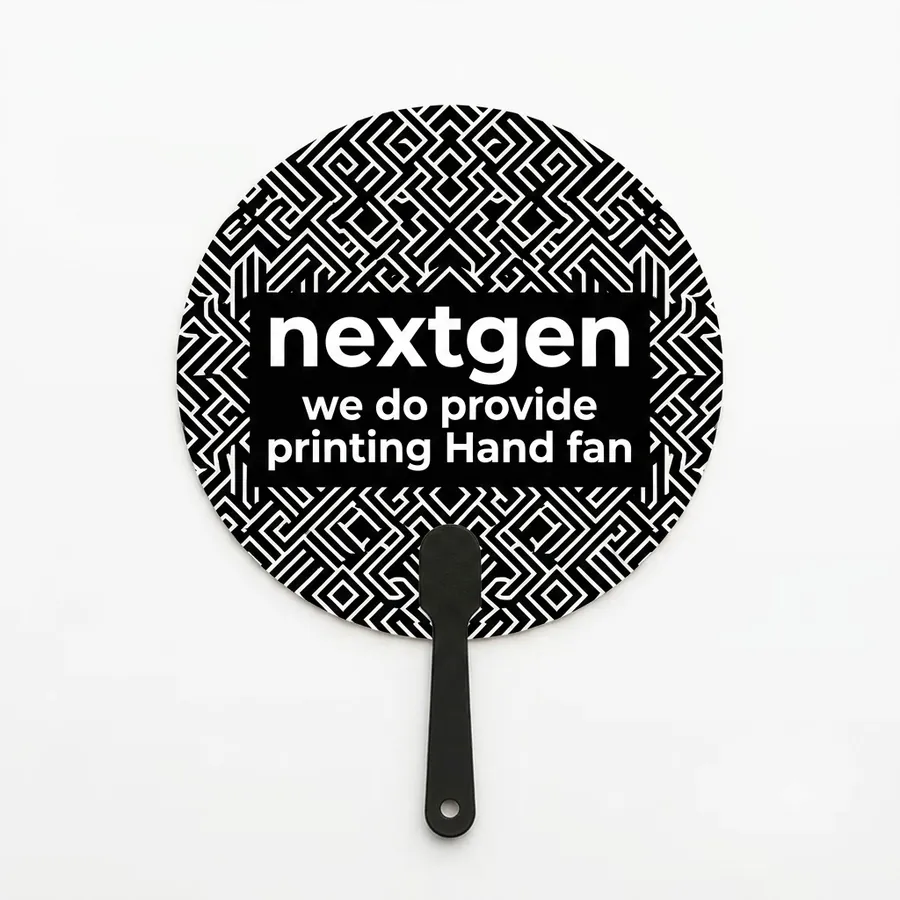
Mall atriums in Malaysia run warm no matter how hard the aircon works against skylights, cooking smells from the food court and hundreds of bodies moving through — which is exactly why a branded hand fan gets kept and used instead of binned at the nearest rubbish point like a flyer does. It's a small print job, but it's the one piece from the booth that leaves the mall in someone's bag and keeps your logo in front of them on the drive home. Pair it with a QR code to your social page or WhatsApp line rather than a generic website URL — a fan gets picked up again days later, and a scannable code converts that second look into a follow or an enquiry.
A two-week timeline that avoids last-minute printing
Mall roadshow slots get confirmed late and printed later, which is how bookings end up rushing a courier for a wheel stand two days before the event. This is the schedule we push clients toward:
- T-14 days — confirm the lot size and layout with mall management; finalise which four core pieces you're printing.
- T-10 days — lock artwork for the counter and A-stands; these take longest because they're the most visible surfaces.
- T-7 days — order the lucky wheel stand and giveaway items; giveaways in bulk (hand fans, stickers, small gifts) need the longest lead time per unit.
- T-3 days — collect and do a full dry-run assembly, not just a visual check — check the wheel spins freely and the counter panels slot together without tools you don't have on site.
- T-1 day — pack a repair kit: extra double-sided tape, cable ties and one spare printed panel for whichever piece is most likely to get scuffed in transport.
Where to start
If you're booking a lot at a mall and want the print list scoped to your actual space and budget rather than a generic package, talk to us — we quote the full event printing set together so nothing arrives mismatched on the day.
我们为 Sunway Pyramid、IOI City Mall、永旺以及巴生谷一带不少中小型商场的路演摊位制作过印刷物料,几乎每一次都会看到同一个问题:客户把大部分预算花在拍照好看的背景板上,却几乎没有投在真正决定顾客会不会停下脚步的那两平方米地面上。马来西亚的商场路演摊位印刷不是单一产品——而是四五件各司其职的物料,订错顺序,摊位可能在活动回顾照片里很好看,实际却拉不到路过的人流。
三秒钟的难题
一个顾客路过你的摊位,大概只有三到四秒钟,之后视线就会转向下一间店铺、手扶梯或手机屏幕。在这短短几秒里,摊位要回答一个问题——「我为什么要停下来」——而且不能靠任何人读一段文案。这靠的是形状与动感,不是段落:一个高度足以在人群中被看见的柜台、一个明显在转动的轮盘、站着而不是坐在桌子后面的工作人员。每一件要印刷的物料,都应该先用这三秒钟法则来检验,再去看设计稿好不好看。
路演摊位核心印刷清单
对一个标准 3 米 x 3 米的商场摊位,我们建议客户先把预算留给四件物料——促销柜台、方向指示架、互动机制,以及一份小礼品。印刷背景板或串旗当然也重要,但它单独存在时只能远远地吸引注意;走近之后,真正促成转化的是这四件。
- 促销柜台——集工作人员站位、收银点与视觉锚点于一体。它通常是顾客视线第一个落点的实体物件,因为在摊位内它是视线高度上最高的东西。
- A 字展示架——放在摊位两侧,能接住从走道两个方向走来的顾客,而不只是正对着柜台走来的人。
- 幸运轮盘架——我们经手的数十场路演里,这是拉停留率最有效的一件物料。一个小游戏,几乎每次都比静态产品展示台更有效。
- 手摇扇或小礼品——会跟着顾客离开摊位,活动拆场之后仍在继续为品牌工作的那一件。
促销柜台还是 A 字架,谁该先订
促销柜台要先订,因为它要同时完成三件事:放置收银机或平板、在十米外就把品牌感传达出去、给工作人员一个不会显得多余尴尬的站位。高度要拿捏准——太低会被人群挡住,太高又会像一道屏障而不是邀请。我们通常会把柜台正面印上两到三个最抢眼的品牌色,产品图则留给 A 字架来呈现,让柜台先被看成一个「形状」,再被看成一段「信息」。
A 字架的作用正好相反——它负责扩大触及面。只靠柜台的话,摊位只朝一个方向,而两侧向外斜放的 A 字架,能让从走道两端走来的顾客,在还没走到摊位前就先看到讯息。A 字架上印的应该是优惠或钩子文案,而不是品牌名——「先试用再决定」比一个 Logo 更能拉近陌生顾客的距离。
为什么幸运轮盘架比静态产品桌更有效
产品展示台要求顾客立刻变成买家,而大多数路过的人还没准备好这么做。幸运轮盘要求的事情小得多——花十五秒、也许能抽中点什么——正是这个更低的门槛,真正让路过的脚步停下来。一旦有人站在摊位前转轮盘,等待结果的空档,介绍话术自然就能带出来。要确保轮盘的每一格都有实际收获,哪怕只是小折扣或关注社媒的入场券——如果轮盘大多写着「再接再厉」,只会训练顾客带着不爽离开,而不是留下互动。
能跟顾客回家的小礼品
马来西亚商场中庭再怎么开冷气都会闷热——天窗晒进来的阳光、美食广场飘出的油烟味,加上成百上千人来回走动——这正是为什么一把印有品牌的手摇扇会被顾客留下来用,而不是像传单一样走两步就丢进垃圾桶。这是一件很小的印刷品,却是摊位所有物料里,唯一能跟着顾客离开商场、在回家路上继续替品牌曝光的一件。搭配一个连到社媒主页或 WhatsApp 的二维码,会比印一个笼统的网址更有用——扇子会在几天后被重新拿起来看,可扫描的二维码能把这次「再看一眼」转化成一个关注或询盘。
提前两周的时间表,避免临时抱佛脚
商场路演档期通常确认得晚,印刷排期也跟着晚,结果就是活动前两天还在赶货运轮盘架。以下是我们建议客户遵循的时间表:
- 活动前 14 天——与商场管理方确认摊位大小与布局,敲定要印制的四件核心物料。
- 活动前 10 天——锁定柜台与 A 字架的设计稿;这两件耗时最长,因为是最显眼的表面。
- 活动前 7 天——下单幸运轮盘架与礼品;批量礼品(手摇扇、贴纸、小礼物)每件的生产周期最长,要提早处理。
- 活动前 3 天——取货并做一次完整的组装彩排,不只是外观检查——确认轮盘转动顺畅、柜台面板能不靠额外工具就顺利拼装。
- 活动前 1 天——准备一个应急包:备用双面胶、束线带,以及一块最容易在运输中刮花的物料的备用印刷面板。
从哪里开始
如果你正准备预订商场摊位,想按照实际空间和预算把印刷清单算清楚,而不是套用一套通用组合,联系我们——我们会把整套活动印刷物料一起报价,确保活动当天不会有物料对不上。