Wobblers, Tent Cards and POSM: Shelf Marketing That Converts摇摇卡、桌牌与 POSM:在货架前完成转化的店内营销
We spend a lot of time on client shop floors, and the pattern is consistent: the sale gets decided in the last half-metre before a hand reaches out, not at the shelf-talker hanging overhead. Shelf marketing — wobblers, tent cards and proper POSM — works at exactly that distance. It's cheap, physical, and sits precisely where attention is already pointed. Most Malaysian SMEs skip this layer entirely, then wonder why a good product sits untouched next to three competitors with worse packaging.
What each format is actually built for
These pieces get lumped together as "in-store marketing", but they do different jobs, and mixing them up wastes budget.
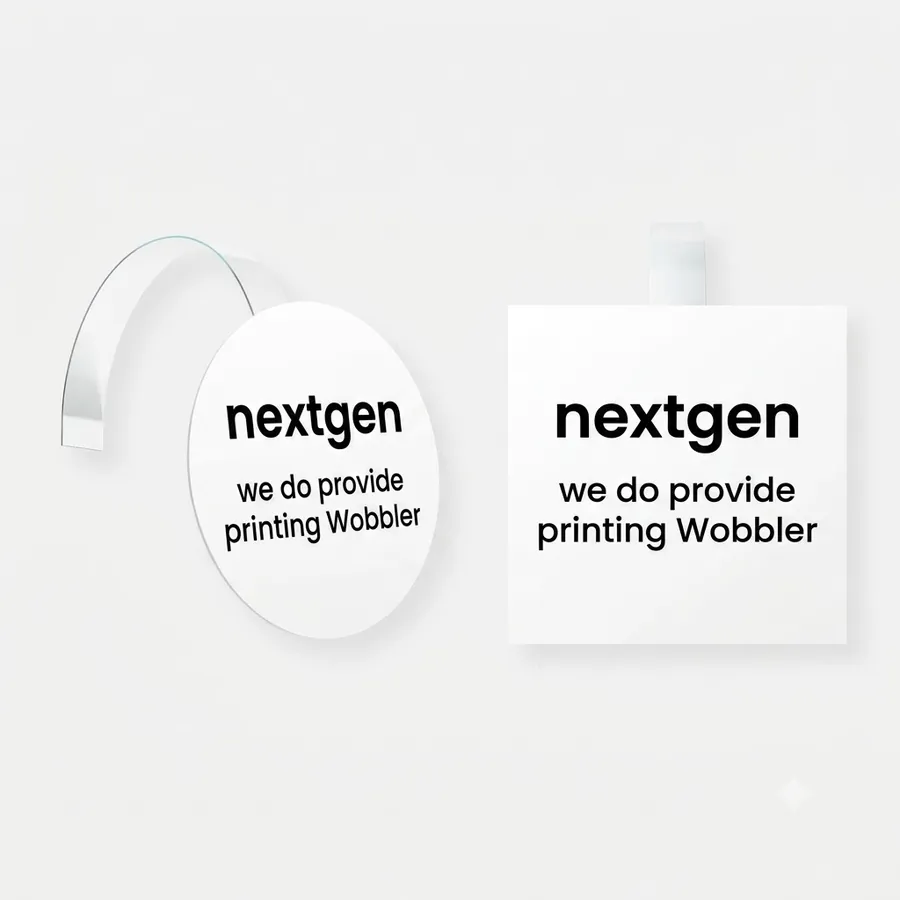
A wobbler is a printed card on a springy PVC strip that bobs with the vibration of foot traffic and aircon airflow. Motion catches peripheral vision before colour or copy does — it's the cheapest attention-grabber retail has. Use it for one message per SKU: a new flavour, a bundle, a price drop. Anything longer than five words gets lost, because the reader is walking, not stopping.
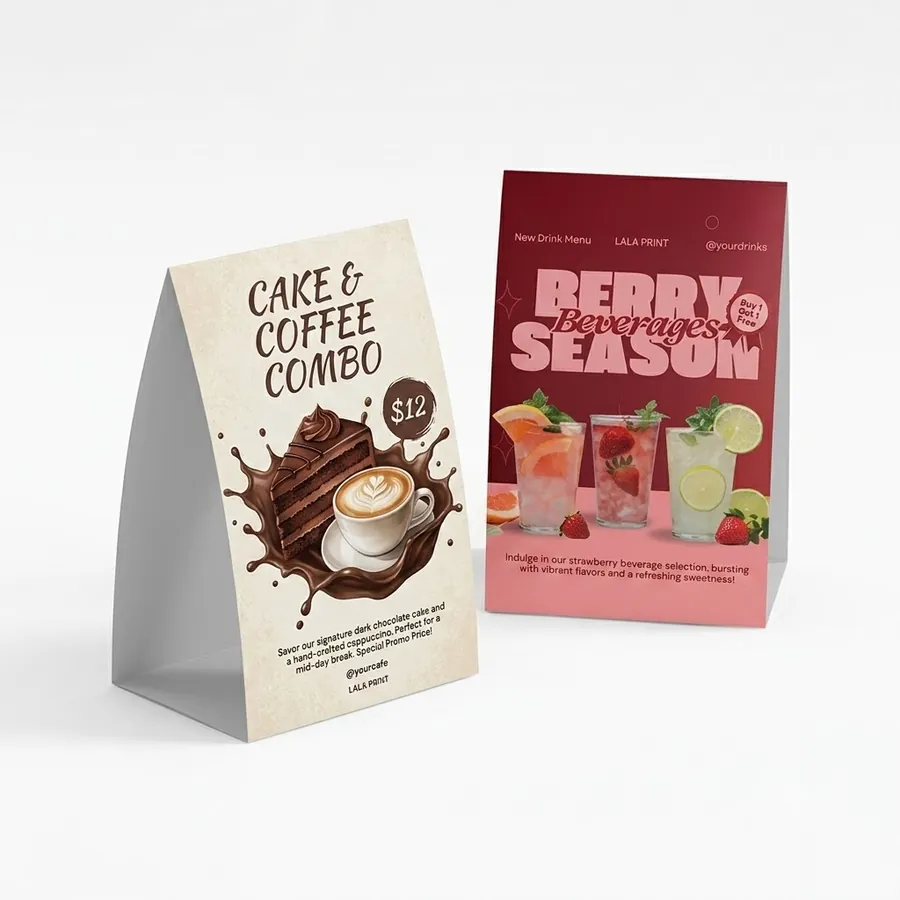
A tent card is a folded, self-standing card built for a surface the customer is already sitting or standing at — a cafe table, a checkout counter, a hotel room desk. It owns close, static attention for minutes rather than seconds, which is why it can carry a QR code, a short menu or a multi-line promo that a wobbler never could.
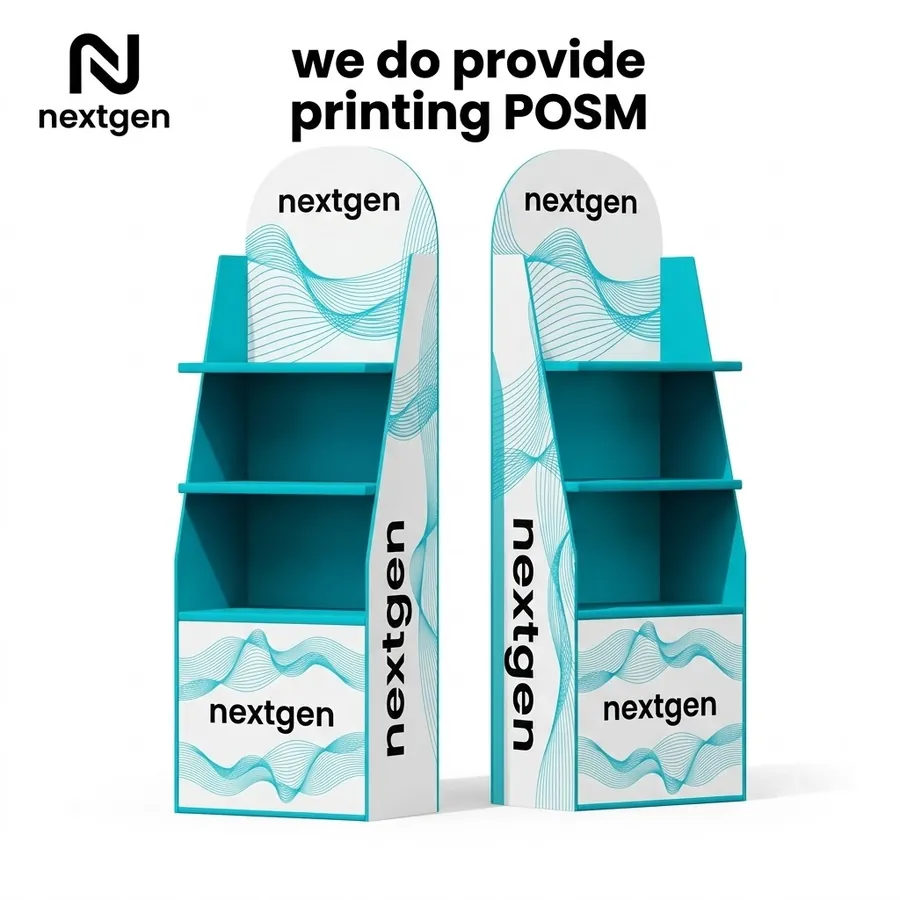
POSM (point-of-sale material) is the umbrella term for anything engineered to a specific retail fixture: shelf strips, shelf toppers, dividers, dump-bin wraps, dispenser units. This is what a brand rollout across 20 outlets actually needs — die-cut to fit hardware that's already on the shelf, not a generic poster taped over it and peeling by week two.
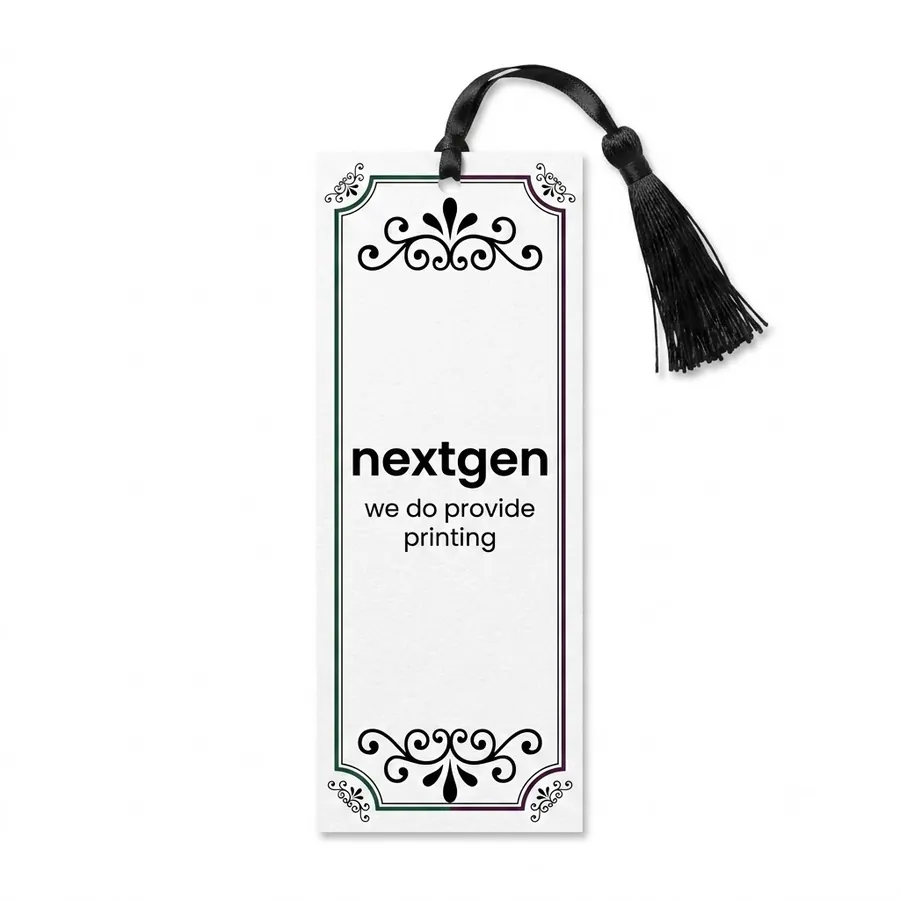
A bookmark works differently again: it's a giveaway that leaves the store with the customer and gets reused for months, so it's a slower brand-recall play rather than an impulse-at-shelf push. Insert one in every parcel or hand it out at the counter, and it keeps your name in front of someone long after the wobbler's five seconds are over.
Match the format to the moment
Supermarkets and pharmacies reward wobblers and shelf-edge POSM, because the customer is scanning fast and comparing brands side by side. Cafes and restaurants get more out of tent cards, because the customer is seated and has time to read. Product launches and roadshows lean on POSM built for a temporary fixture — a dump bin, a demo table, a dispenser unit that has to survive being handled all day. If you sell through more than one channel, budget for more than one format; a single wobbler run rarely does the job of all three.
What to specify before you ask for a quote
- Measure the actual fixture — shelf lip depth, rail width, table size — before ordering POSM. A design that looks right on screen and doesn't clip onto the shelf on install day is a wasted print run.
- Match material to job — wobblers need a genuine PVC spring strip, not stiff card taped to a strip; tent cards want 300–360gsm card with lamination so they survive spills and handling; bookmarks want the same thick stock, plus rounding if they're going out as gifts.
- Decide the mounting — self-adhesive shelf mount, clip-on, or sold pre-assembled and ready to place. Each changes install time on the day, which matters if staff are doing it themselves across several outlets.
- Check food-safety needs — anything sitting directly against food (cake cards, food flags) needs food-grade stock; POSM or tent cards near but not touching food usually don't.
- Confirm reprint turnaround — prices and promos change; ask what a reorder takes once artwork is on file, not just what the first run costs.
Rolling out to more than one outlet
Chain rollouts fail on logistics more often than on design. Lock one die-cut template so every outlet's fixture takes the same piece, then use variable data printing if branches need different pricing, QR codes or outlet names on otherwise identical artwork — no need to re-design 20 times for 20 addresses. Ask for flat-pack delivery for POSM units so they survive transport to outlets outside the Klang Valley, and stagger the install schedule rather than shipping everything for one date; a few outlets running the old material for two extra days beats every outlet installing crooked because staff are rushing.
Where this goes wrong
The mistakes we see most often are avoidable. A wobbler ordered on stiff art card instead of a real spring strip doesn't bob — it just hangs there, defeating the entire point. POSM ordered from a photo of the shelf instead of a tape measure arrives a centimetre off and doesn't clip on. One tent card design gets reused across tables of different sizes and becomes unreadable from the far seat. And promotional material sitting an inch from open food gets flagged by an inspector because nobody checked whether the stock was food-grade. None of these cost more to get right the first time — they cost more to redo.
If you're weighing wobblers against POSM against a tent card run for an upcoming launch or a shelf refresh, tell us the fixture and the outlet count and we'll tell you honestly which format earns its budget — our marketing material and banner, board & display ranges cover all four formats above, made to the shelf you actually have.
我们常年在客户的卖场走动,看到的规律很一致:成交往往在手伸出去前的最后半米内就决定了,而不是在头顶那个吊牌上。货架营销——摇摇卡、桌牌与真正贴合货架的 POSM——正是在这个距离发挥作用。它成本低、看得见摸得着,而且恰好摆在顾客的视线已经落到的地方。大多数马来西亚中小企业完全跳过这一层,然后纳闷为什么一个好产品摆在包装更差的三个对手旁边却卖不动。
每种物料到底该做什么
这几种物料常被笼统归为「店内营销」,但它们各司其职,混用只会浪费预算。
摇摇卡是印刷卡片配一条弹性 PVC 弹条,随着人流走动和空调气流的震动轻轻摇摆。动态比色彩或文案更快抓住余光——这是零售业最便宜的注意力磁铁。用它来传达一个单品的一句话信息:新口味、买一送一、降价。超过五个字就会被路过的顾客忽略,因为对方在走,不是在停下来读。
桌牌是折叠式自立卡片,设计给顾客已经坐着或站着的那个平面——咖啡桌、收银台、酒店房间的桌面。它占据的是几分钟而非几秒钟的近距离静态注意力,所以它能承载二维码、简短菜单或多行促销文案,这是摇摇卡做不到的。
POSM(陈列物料)是一个统称,泛指所有按特定零售货架结构定制的物料:货架条、顶牌、分隔条、堆头围裹、陈列盒。这才是 20 家门店品牌铺货真正需要的东西——按货架现有结构模切贴合,而不是随便贴一张海报,两周就翘边脱落。
书签又是另一种玩法:它是随顾客离店的赠品,能被反复使用数月,所以它打的是长线的品牌记忆,而不是货架前的冲动购买。每个包裹里放一张,或在柜台随手送出,就能在摇摇卡那五秒钟过后很久,依然让顾客记得你的名字。
物料要配对场景
超市与药房最适合摇摇卡与货架边 POSM,因为顾客扫视速度快,正在货架前比较各个品牌。咖啡馆与餐厅更适合桌牌,因为顾客已经坐下,有时间阅读。新品上市与商场路演则更依赖为临时装置定制的 POSM——堆头、试用桌、陈列盒,得撑得住一整天被反复触碰。如果你的产品同时走多个渠道,就该为不止一种物料留预算;单靠一批摇摇卡很难同时扛起三种场景的任务。
报价前该确认的规格
- 先量实际货架尺寸——货架挂钩深度、导轨宽度、桌面大小——再下单 POSM。稿件在屏幕上再好看,安装当天卡不上货架,这批印刷就白印了。
- 材质要对得上用途——摇摇卡要用真正的 PVC 弹条,而不是厚卡纸粘一条塑料条充数;桌牌建议 300–360gsm 厚卡加覆膜,才经得起打翻的饮料与频繁翻动;书签用同等厚卡,作为礼品送出时可再加圆角处理。
- 确定安装方式——背胶直贴货架、卡扣式,还是成品交付即可摆放。三种方式安装耗时不同,如果是多家门店由员工自行安装,这一点很关键。
- 确认食品安全要求——直接接触食品的物料(蛋糕卡、食品插旗)需要食品级材质;靠近但不接触食品的 POSM 或桌牌通常不需要。
- 问清补印周期——价格与促销会变动,重点是稿件存档后补印要多久,而不只是首批印刷要多少钱。
多门店铺货怎么落地
连锁门店铺货失败,多半栽在物流上,而不是设计上。先定好一套模切模板,让每家门店的货架都能装上同一款物料,再用可变数据印刷处理不同门店需要的价格、二维码或店名——不必为 20 个地址重新设计 20 次。POSM 建议要求平板包装交付,才经得起运往巴生谷以外门店的路程;安装排期也不要一次性压在同一天完成——宁可几家门店多用两天旧物料,也不要让所有门店的员工赶工装歪。
常见的坑
我们最常看到的错误其实都能避免。摇摇卡用厚卡纸而不是真正的弹条印刷,结果挂上去纹丝不动,完全失去了摇摇卡的意义。POSM 只靠一张货架照片下单而不实际量尺寸,到货后差了一公分,卡不上货架。同一款桌牌设计套用在大小不同的桌子上,远处座位根本看不清。促销物料紧贴着裸露食品摆放,被稽查员点名,只因没人确认过材质是否食品级。这些错误在下单前改正不会多花钱,返工重印才真的费钱。
如果你正在为即将到来的新品上市或货架翻新,在摇摇卡、POSM 与桌牌之间拿不定主意,告诉我们你的货架结构与门店数量,我们会如实告诉你哪种物料最值得投——我们的营销物料与横幅、板材与展示架系列涵盖以上四种物料,按你实际的货架定制。